Rollover Fire: What It Is and How it Differs from a Flashover or Backdraft
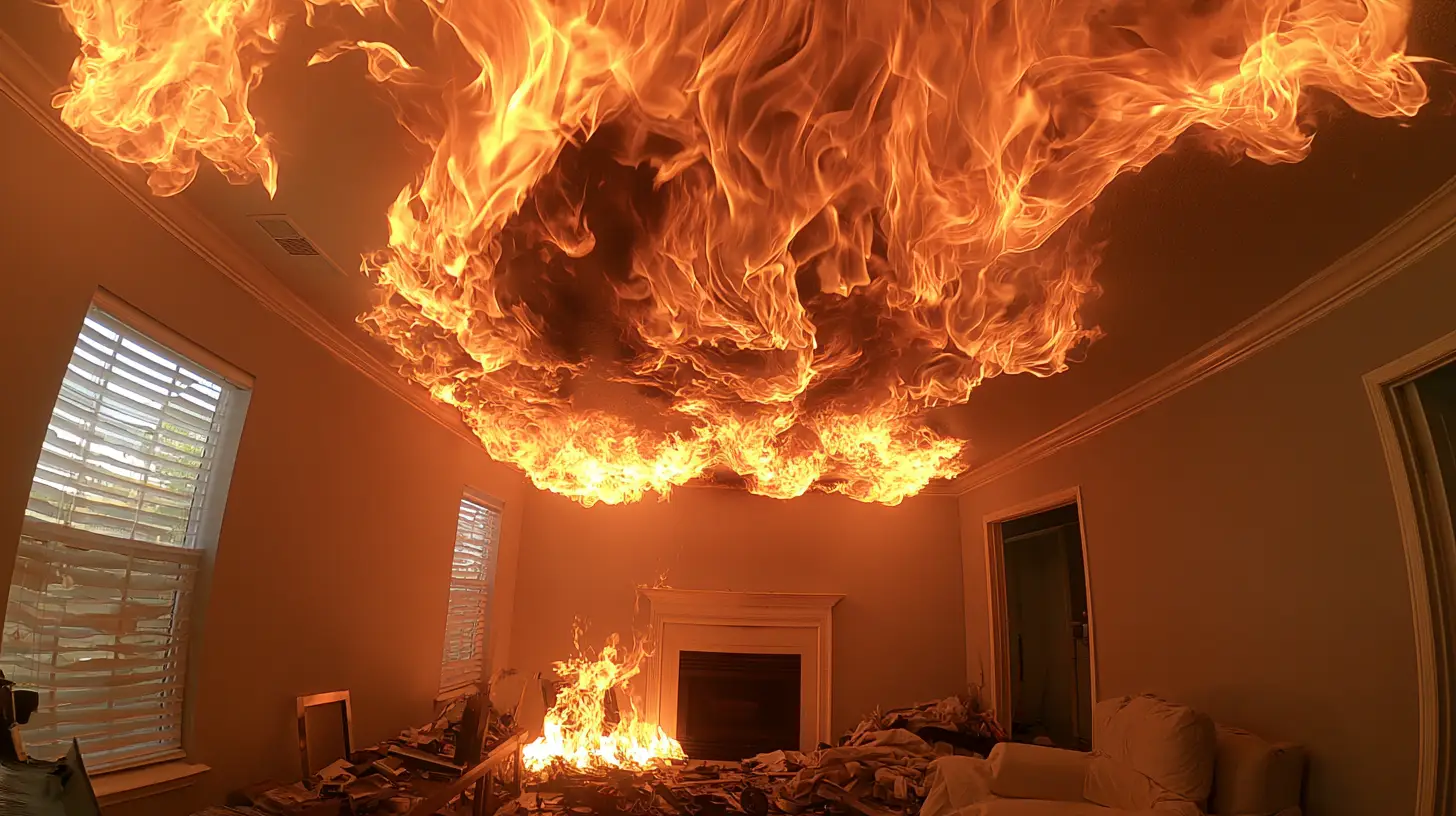
There's a particular moment fire crews are trained to watch for, not the fire itself, but the ceiling above it. When flame starts rippling across that surface, well ahead of where the fire actually started, something specific and identifiable is happening. It has a name, a mechanism, and, unlike a lot of fire behavior, an actual window where intervention still works. Investigators care about it too, since whether a room went through rollover changes what its burn patterns can and can't tell you afterward.
Rollover, sometimes called flameover, is what happens when the unburned gases collecting at a ceiling ignite. It looks distinctive: flame rippling or rolling along the overhead surface, radiating outward from wherever the fire actually started, sometimes well past the point where anyone would expect fire to be. It is not simply "the fire getting bigger." It is a specific, separate event, one that NFPA 921 treats as its own defined phenomenon rather than a stage of flashover.
That distinction matters more than it might seem. Rollover can happen without the room's actual contents catching fire at all. The furniture, the walls, the fuel packages sitting in that room may not be burning yet even as flame races across the ceiling above them.
Every fire produces pyrolysis gases: unburned, flammable byproducts released as nearby materials heat without fully combusting. Since hot gas rises, these byproducts collect at the ceiling and build in concentration as the fire continues. Once that layer reaches its lower flammable limit, meaning there's enough fuel present relative to available oxygen, it ignites on contact with flame or sufficient heat.
This is a fuel-concentration event, not a heat event. Compare that to flashover, which is driven by radiant heat pushing the room's actual surfaces to their own ignition point. Rollover and flashover are frequently confused, and they're often connected in sequence, but they are not the same mechanism, and treating them as interchangeable is one of the more persistent mix-ups in fire behavior discussions.
A handful of signs tend to show up together when rollover is developing:
- Flame visibly rippling or rolling across the ceiling, extending past the fire's apparent source.
- A smoke layer that's thickening and pushing lower into the room, evidence that more unburned gas is accumulating overhead.
- Radiant heat climbing sharply, even in parts of the room with no visible flame yet.
- Fire behavior that looks like it's outpacing the actual fuel load anyone can see.
None of these signs are subtle once you know to look for them, which is part of why rollover recognition gets specific, dedicated attention in fire behavior training. It's a distinctive enough visual that missing it usually means not knowing what to look for, not that it happened quietly.
Here's what sets rollover apart from most of the dangerous fire behavior phenomena covered elsewhere on this site: it's manageable in real time. Proper ventilation, releasing the superheated gas layer before it reaches ignition concentration, can interrupt the sequence entirely.
A rollover doesn't guarantee flashover follows. It signals that conditions are moving that direction, and it hands whoever's on scene a genuine opportunity to change the outcome before the room reaches full involvement, something flashover itself doesn't offer once it's underway.
That's also why rollover matters as a distinct concept rather than just a footnote to flashover. It is the earlier, still-actionable stage of the same underlying problem: unburned gas building somewhere it shouldn't be.
Both rollover and backdraft involve unburned gas igniting, which is where the confusion usually starts. But the conditions producing each are almost opposite. Rollover happens in a fire that still has enough ventilation to keep burning normally; the gas layer ignites as it accumulates, with no sudden change in airflow required.
Backdraft needs the opposite setup entirely: an oxygen-starved fire that's been smoldering without enough air, followed by a sudden rush of fresh oxygen into that space, producing an explosive event rather than a rolling flame front. One is a byproduct of an actively burning fire. The other is what happens when a fire that's been suffocating suddenly isn't anymore.
Because rollover only ignites the gas layer and leaves room contents alone, a compartment that went through rollover without progressing to flashover can hold onto more useful burn pattern evidence than one that reached full involvement. Fuel packages may still show distinguishable, uneven damage rather than the more uniform destruction flashover tends to leave behind, which matters directly when someone is trying to work out where a fire actually started.
The physical trail rollover leaves is thin on its own, though. It doesn't scorch a signature into the walls the way flashover does. What usually survives is witness and firefighter accounts describing flame rolling across the ceiling, sometimes bodycam or dash-cam footage, and whatever timeline can be pieced together from when those observations were made. That reconstruction work, placing a fire accurately within its growth stages using exactly this kind of secondhand account, is covered in Blazestack's guide to fire investigation timeline reconstruction.
A rollover case is unusual in that the strongest evidence often isn't physical at all. It's what a firefighter remembers seeing, what a bodycam happened to catch, what got said in the minutes right after suppression, before anyone had time to write it down properly.
Getting that testimony organized and tied to the rest of the file matters as much as photographing the room itself. Blazestack keeps scene photos, witness statements, and firefighter accounts in one case file rather than scattered across notebooks and phones, and every piece of it moves through a documented chain of custody, so testimony collected on scene still holds up months later when a report gets challenged.
Is rollover dangerous?
Yes. It extends flame well past where anyone would expect fire to be, and it often precedes flashover, one of the most dangerous events in structural firefighting.
Does rollover always turn into flashover?
No. It signals conditions building toward flashover, but ventilation or suppression can interrupt that progression before the room reaches full involvement.
Can someone tell after the fact whether rollover happened?
Not usually from physical evidence alone, since rollover doesn't necessarily consume room contents the way flashover does. Investigators generally lean on witness and firefighter accounts, plus any available footage, to establish whether it occurred.
Is "flameover" a different thing from rollover?
No, same phenomenon, different name. The terms get used interchangeably throughout fire service and investigation literature.
Why bother distinguishing rollover from flashover in a report?
Because they leave different evidence behind. A room that went through rollover without reaching flashover may still show identifiable, uneven burn patterns useful for origin work, while a room that hit flashover typically doesn't.

Trusted by Public and Private Investigator Teams Everywhere
Whether you're a big state agency, a small local fire department or somewhere in between, Blazestack software (NFPA 921® & CJIS compliant) collects fire scene data and generates standardized origin and cause reports in a fraction of the time of other methods.
To learn more about Blazestack, give us a call at (866) 303-4344 or email us at support@blazestack.com
Get Your Free 14-Day Trial and Custom Price Quote Now
We'll let Blazestack do the talking. Try it out right now for free.
A member of our staff will be in touch shortly.