Top 16 Fire Investigation Books That Will Ignite Your Career (2026)

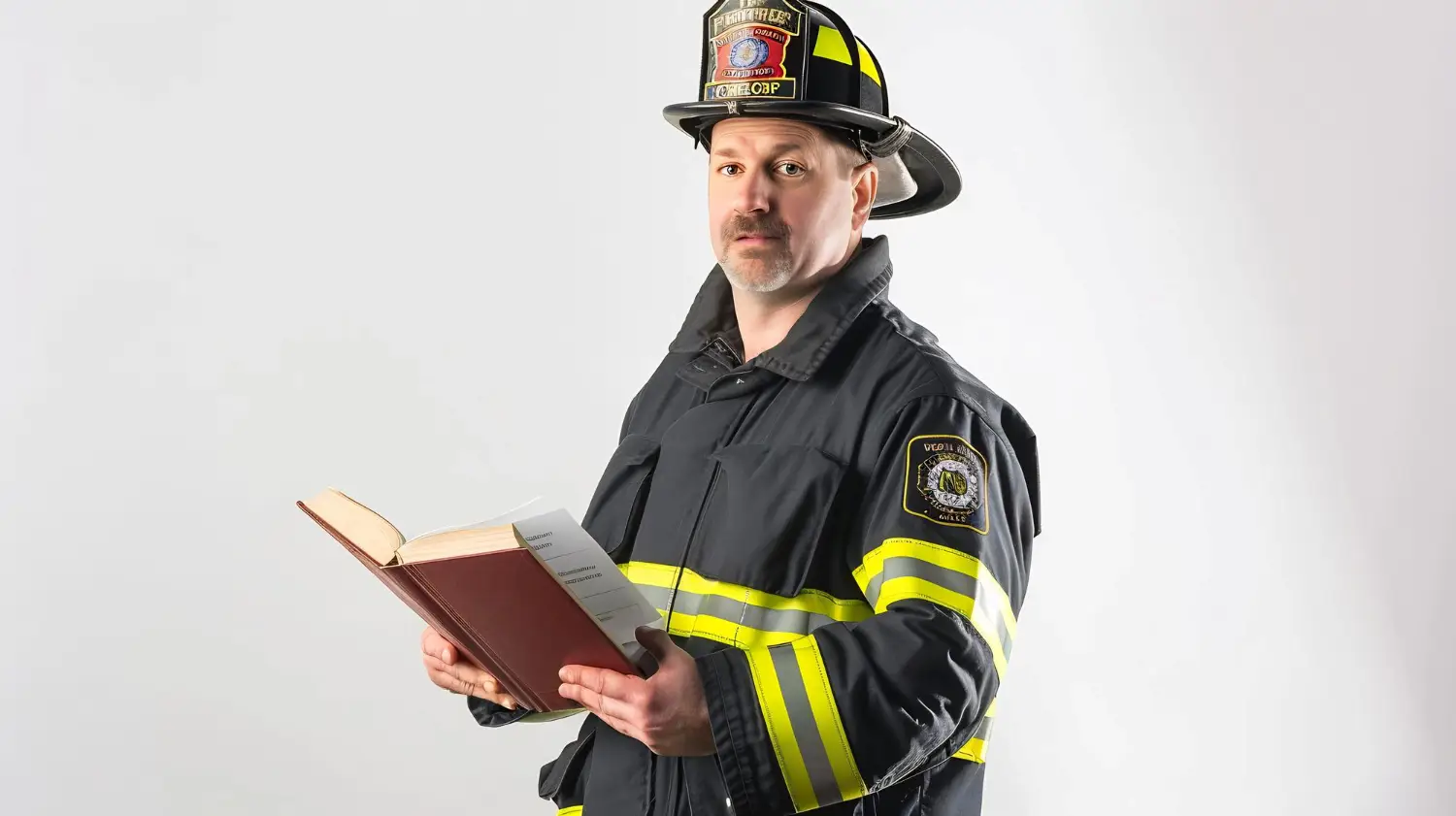
Picture this: You're on the witness stand, and the opposing attorney just asked you to explain why you ruled out accidental ignition. Your answer better be rock-solid, because if it's not, you've just watched your credibility, and maybe someone's freedom, go up in smoke.
That's the reality of modern fire investigation. The old-school methods our mentors used? Many don't hold up in court anymore. The YouTube videos everyone watches? They won't save you during cross-examination. Here at Blazestack we’ve created a list that will suffice to start your own fire collection.
If you’ve spent years building your professional library, and learned the expensive way which best fire investigation books deliver value versus those that just collect dust. This guide cuts through the noise to show you exactly what belongs on your shelf.
When you're stuck at a scene at 2 AM trying to figure out what caused that weird burn pattern, YouTube seems like a lifesaver. But here's the thing, when you're testifying six months later and the defense attorney starts grilling you about your methodology, "I saw it in a video" isn't going to cut it.
The field changes constantly. What we thought we knew about pour patterns five years ago? A lot of that's been debunked. Courts expect you to know this stuff, and they expect you to prove you know it through credible sources.
When opposing counsel challenges your conclusions, they won't question your reference to NFPA 921 or Kirk's Fire Investigation. But they'll absolutely tear apart anything based on informal sources or outdated methods.
Think of it this way: watching a 10-minute YouTube video about burn patterns might show you what they look like. But studying Chapter 18 of NFPA 921 teaches you why they form, how to document them properly, and what you can legally conclude from them. That's the difference between looking competent and being competent.
Proper fire investigation procedures and techniques are fundamental to building investigative competency, and quality literature provides the scientific foundation these procedures require.
Professional books offer something YouTube videos and blog posts can't: rigorous peer review, comprehensive coverage, and legal recognition. Your professional library becomes evidence of your commitment to staying current with industry standards, protecting you professionally when insurance companies, attorneys, and courts expect investigators to demonstrate current knowledge.
These aren't just books to impress clients, they're your daily toolkit. Every investigator needs these three on their shelf (and probably memorized).
- NFPA 921: The Investigation Bible You Can't Ignore
If you own only one fire investigation book, make it this one. Courts recognize NFPA 921 as the gold standard. When attorneys challenge your methods, compliance with this guide becomes your shield.
But here's what makes it useful: it doesn't just tell you what to do, it explains the why behind scientific methodology. You'll learn how to avoid the subjective interpretations that led to wrongful convictions. The guide covers everything from fire behavior to evidence collection to report writing that meets legal standards.
Modern investigators must understand NFPA 1033 and NFPA 921 standards to ensure their methodology meets both professional qualifications and investigative best practices.
Key Chapters You'll Use Most:
- Chapter 4: Basic methodology framework for all investigations
- Chapter 5: Evidence-based pattern interpretation techniques
- Chapter 6: Proper analysis of electrical fire causes
- Chapter 18: Systematic approaches to finding fire origin
- Chapter 19: Methods for identifying ignition sources
- Chapter 23: Legal standards for documentation
- Kirk's Fire Investigation: Where Science Meets Reality
This is where the rubber meets the road. DeHaan and Icove show you how chemistry, physics, and engineering apply to actual fire scenes.
The book excels at explaining complex fire dynamics in terms you can use. You'll understand why certain burn patterns develop, how different materials behave in fires, and what physical evidence tells you about origin and cause. The photos and diagrams help you visualize concepts you'll encounter in the field.
What sets this apart is how it connects lab analysis with field investigation. You'll learn proper sample collection, which tests provide useful information, and how to interpret lab results within the context of your scene findings.
This comprehensive textbook combines scientific principles with practical application, covering fire dynamics, evidence analysis, and investigative techniques while integrating chemistry, physics, and engineering concepts for fire behavior.
- Forensic Fire Scene Reconstruction: Building Your Case
O'Connor tackles reconstruction systematically. Instead of relying on gut feelings or traditional "rules of thumb," you'll learn evidence-based approaches to analyzing burn patterns and physical damage.
This book particularly shines with complex scenes, multiple potential origins, competing theories, that kind of headache. You'll learn how to evaluate different possibilities and eliminate them through systematic analysis rather than guesswork.
The reconstruction methodology helps you build defensible conclusions and explains how to present results clearly to people who don't know a flashover from a rollover. O'Connor emphasizes documentation techniques that support your findings and explains how to present reconstruction results clearly to non-technical audiences (including juries).
Once you've got the basics down, you'll encounter cases that need specialized knowledge. These books cover the tricky stuff that general texts barely touch.
- Electrical Fire Analysis: Decoding the Most Complex Evidence
Electrical fires are where a lot of investigators get into trouble. Stauffer's book dives deep into electrical system analysis, reading arc patterns, circuit behavior, identifying actual electrical causes versus damage that happened after the fire started.
Here's a real scenario: You find melted copper conductors in a basement electrical panel. Without specialized knowledge, you might conclude electrical failure caused the fire. But Stauffer's methodology teaches you to examine arc bead formation, conductor damage patterns, and circuit protection operation. Your analysis might reveal the arcing occurred after fire exposure from an upstairs origin, completely changing your cause determination.
The book covers practical skills you'll use regularly: examining breaker panels, analyzing wire damage, and how electrical systems fail. Most importantly, you'll learn to distinguish between arcing that caused a fire and arcing that resulted from fire exposure.
Blazestack dove into the electrical arcing and how it occurs and found it requires specialized knowledge that goes beyond basic fire investigation training and demands dedicated study of electrical systems.
Stauffer also addresses the limitations of electrical evidence. Not every electrical anomaly indicates causation, and this book helps you avoid overreaching conclusions that won't survive legal scrutiny.
- Vehicle Fire Investigation: Beyond the Obvious
Vehicle fires require specialized knowledge that standard texts don't provide. Barowy addresses the unique challenges of automotive investigations, fuel system analysis, complex mechanical failures, intentional vehicle fires.
You'll learn how different vehicle systems fail and create fire hazards, from simple electrical shorts to complex transmission problems. The book also covers intentional vehicle fires and the evidence patterns they create.
With today's sophisticated electronic systems, alternative fuels, and safety features, you need current knowledge about how modern vehicles behave in fires and how that affects your investigation approach. Barowy's specialized guide covers these unique challenges for both passenger vehicles and commercial transportation incidents.
Technical knowledge means nothing if you can't communicate it effectively in court or survive aggressive cross-examination. These resources prepare you for the legal side of the job.
- Scientific Protocols: Avoiding the Conviction Trap
Lentini's work addresses the profession's troubled history with wrongful convictions. The text emphasizes scientific rigor and challenges traditional practices that lack empirical support.
You'll learn how to apply proper scientific methodology to avoid the mistakes that led to cases like Cameron Todd Willingham's wrongful execution. Lentini explains how to test hypotheses, eliminate alternative explanations, and reach conclusions that can withstand scientific scrutiny. Many of the wrongful convictions Lentini discusses trace back to negative corpus reasoning: treating the absence of an accidental explanation as proof of arson.
Modern investigators must understand the scientific method of fire investigation to avoid the pitfalls that have plagued the profession and ensure their conclusions meet current legal standards.
Courts increasingly expect scientific validity in expert testimony. This resource helps you meet those expectations while avoiding the pitfalls that have damaged the profession's credibility. The book also addresses the legal implications of your investigative approach and how to document your reasoning process for later testimony.
- Fire Investigation Handbook: Practical Legal Guidance
Midkiff focuses on the practical aspects of legal preparation that other books overlook. You'll learn how to write reports that clearly communicate your findings, document evidence properly, and prepare for expert witness testimony.
The handbook addresses common courtroom challenges fire investigators face. How do you explain complex technical concepts to a jury? What documentation do you need to support your conclusions? How do you handle aggressive cross-examination without appearing defensive?
This resource also covers the business side of expert witness work, including fee structures, scheduling considerations, and professional conduct standards that protect your reputation and credibility.
- Courtroom Testimony: Surviving Cross-Examination
Barker's book targets the presentation challenges that make or break expert witnesses. You'll learn how to communicate technical findings clearly without oversimplifying or losing accuracy.
The text provides practical strategies for different types of cross-examination. Some attorneys try to confuse you with rapid-fire questions, others attempt to undermine your credibility through personal attacks. Barker explains how to recognize these tactics and respond effectively.
You'll also learn how to use visual aids effectively, present complex evidence clearly, and maintain credibility under pressure. The book includes examples of effective testimony and common mistakes that damage expert witness credibility.
You’ll understand why the role of expert witnesses in fire investigations is crucial for investigators who may be called to testify about their findings and methodology in legal proceedings.
Common Cross-Examination Tactics and Responses:
- Rapid-fire questions: Request clarification, slow down the pace
- Credential attacks: Cite relevant experience and training
- Methodology challenges: Reference peer-reviewed standards
- Alternative theories: Explain why you eliminated other possibilities
- Technical complexity: Use simple analogies and visual aids
- Prior case history: Acknowledge limitations, show growth
The field keeps evolving. New research challenges old assumptions, and technology introduces fresh investigative tools. Staying current is necessary for credibility.
- Modern Fire Science Research: Challenging Old Assumptions
Government research has systematically challenged many traditional fire investigation assumptions. NIJ and ATF studies provide hard data about burn pattern reliability, flashover effects, and the limitations of visual analysis techniques investigators relied on for decades.
These have real-world implications. Current research helps you avoid conclusions that lack scientific support and could lead to wrongful accusations or missed evidence.
When opposing counsel challenges your methods, you can cite peer-reviewed studies that support your approach rather than relying on tradition or personal experience alone.
- Government-Sponsored Research: Evidence-Based Findings
NIJ and ATF research provides evidence-based findings that contradict traditional fire investigation myths, covering topics such as burn pattern reliability, flashover effects, and limitations of visual fire scene analysis. These research papers provide ammunition for courtroom testimony and help you avoid conclusions that lack scientific support.
- IAAI Publications: Peer-Reviewed Professional Insights
International Association of Arson Investigators journals and technical bulletins provide peer-reviewed research, case studies, and updates on investigative techniques from practicing professionals worldwide.
IAAI publications offer something unique: research conducted by practicing investigators rather than purely academic researchers. These journals bridge the gap between laboratory studies and field application, providing case studies and peer learning opportunities that accelerate professional development.
Technology Integration: Tools That Help
Digital documentation technology has revolutionized fire scene recording. Modern cameras, 3D scanning equipment, and photogrammetry software create documentation that was impossible just a few years ago.
But you need to understand both capabilities and limitations. 3D scanning captures incredible detail, but you must know how to position equipment properly and interpret results accurately. Digital photography offers enhanced evidence preservation, but you need proper techniques to ensure admissibility.
Mastering digital photography for fire investigators has become essential as courts increasingly expect high-quality visual documentation to support investigative findings.
These tools also change how you present evidence in court. Interactive 3D models can help juries understand complex scenes, but you need to know how to use them effectively without overwhelming your audience.
Laboratory Integration: Making Sense of Scientific Results
Modern fire investigation increasingly relies on laboratory analysis to support field findings. how to integrate lab results with scene evidence requires specialized knowledge that general investigation texts don't provide.
You'll need to understand what different tests can and cannot tell you. Hydrocarbon detection might indicate accelerant use, but it could also result from legitimate sources. The key is learning how laboratory results support or contradict your field observations.
Professional development requires ongoing education through certification programs and training materials that keep you current with evolving standards while providing structured advancement paths.
Professional Certification Study Materials: Your Path to Credibility
- IAAI Certified Fire Investigator (CFI): The Gold Standard
The CFI certification represents the pinnacle of fire investigation credentialing. Study materials cover every aspect of professional practice, fire dynamics, evidence collection, scene documentation, report writing standards.
CFI study guides don't just prepare you for an exam, they provide comprehensive professional education. The certification process also emphasizes professional ethics and legal responsibilities, protecting both you and your clients while maintaining the profession's credibility.
CFI certification requirements are essential for investigators seeking professional recognition and career advancement in the fire investigation field.
- NAFI Certified Fire and Explosion Investigator: Practical Focus
NAFI certification materials emphasize practical application over theoretical knowledge. These resources focus on skills you'll use daily: evidence collection, scene documentation, witness interviewing, and report preparation.
The study materials include extensive case examples that demonstrate proper investigative techniques. You'll see how to apply theoretical knowledge to real-world situations and avoid common mistakes that compromise investigations. NAFI resources also address business aspects of fire investigation, including client relations and professional conduct standards.
- NFPA 1033 Professional Qualifications: Meeting Industry Standards
NFPA 1033 establishes minimum qualifications for fire investigators at different levels. Study materials help you understand what competencies you need and how to demonstrate them effectively.
The standards cover both knowledge and performance requirements. You need to understand fire science principles, but you also need to demonstrate practical investigation skills through hands-on evaluation.
Certification Preparation Steps:
- Complete prerequisite education and experience
- Study official certification manuals and guides
- Review NFPA 921 and relevant standards
- Practice with sample questions
- Attend preparation workshops
- Schedule your examination
- Maintain continuing education for renewal
Advanced Training and Specialization Resources
- Wildfire Investigation: Nature's Comaplexity
Wildfire investigation requires specialized knowledge that structural fire training doesn't provide. You'll need to understand weather patterns, fuel moisture content, topographic influences, and fire behavior in natural environments.
Learning how to investigate a wildland fire requires unique environmental factors and evidence patterns that differ significantly from structural fire investigation.
Specialized texts cover evidence collection in outdoor environments, witness interviewing for wildfire cases, and coordination with multiple agencies involved in wildfire response and investigation. These resources also address unique legal aspects including liability issues and coordination with law enforcement.
- Industrial Fire Investigation: High-Stakes Complexity
Industrial investigations involve complex processes, hazardous materials, and sophisticated equipment requiring specialized knowledge. Standard training doesn't prepare you for chemical plant incidents or manufacturing facility fires.
Specialized manuals cover process safety analysis, hazardous material behavior, and industrial equipment failure modes. You'll learn how to investigate incidents involving complex chemical processes, pressure vessels, and automated control systems.
These resources also address regulatory compliance issues specific to industrial facilities. OSHA requirements, EPA regulations, and industry-specific standards all affect how you conduct investigations and what conclusions you can draw.
Quick Reference Guide
- NFPA 921 remains the gold standard reference that courts recognize
- Kirk's Fire Investigation combines real science with practical application you'll use daily
- Specialized books for electrical fires and vehicle investigations prevent costly mistakes
- Legal preparation resources help you survive cross-examination and present findings effectively
- Modern research publications challenge outdated myths that led to wrongful convictions
- Case study analysis teaches lessons from both successful investigations and documented failures
- Certification study materials provide structured paths for professional advancement
Your professional library provides the knowledge foundation, but Blazestack provides the digital infrastructure to apply that knowledge efficiently. Our platform incorporates the best practices you've studied into streamlined workflows that ensure NFPA 921 compliance while dramatically reducing report writing time.
Blazestack's fire investigation case management software integrates seamlessly with the methodologies learned from professional literature, creating efficient workflows that maintain scientific rigor.
With features including automatic evidence logging, collaborative case management, and one-click professional report generation, Blazestack helps you focus on the investigative work you've trained for rather than administrative tasks. Transform your hard-earned expertise into more effective investigations.
Start your free trial today and experience how professional software enhances professional knowledge.

Trusted by Public and Private Investigator Teams Everywhere
Whether you're a big state agency, a small local fire department or somewhere in between, Blazestack software (NFPA 921® & CJIS compliant) collects fire scene data and generates standardized origin and cause reports in a fraction of the time of other methods.
To learn more about Blazestack, give us a call at (866) 303-4344 or email us at support@blazestack.com
Get Your Free 14-Day Trial and Custom Price Quote Now
We'll let Blazestack do the talking. Try it out right now for free.
A member of our staff will be in touch shortly.