Electrical Arcing in Fire Investigation: Causes, Signs & Analysis

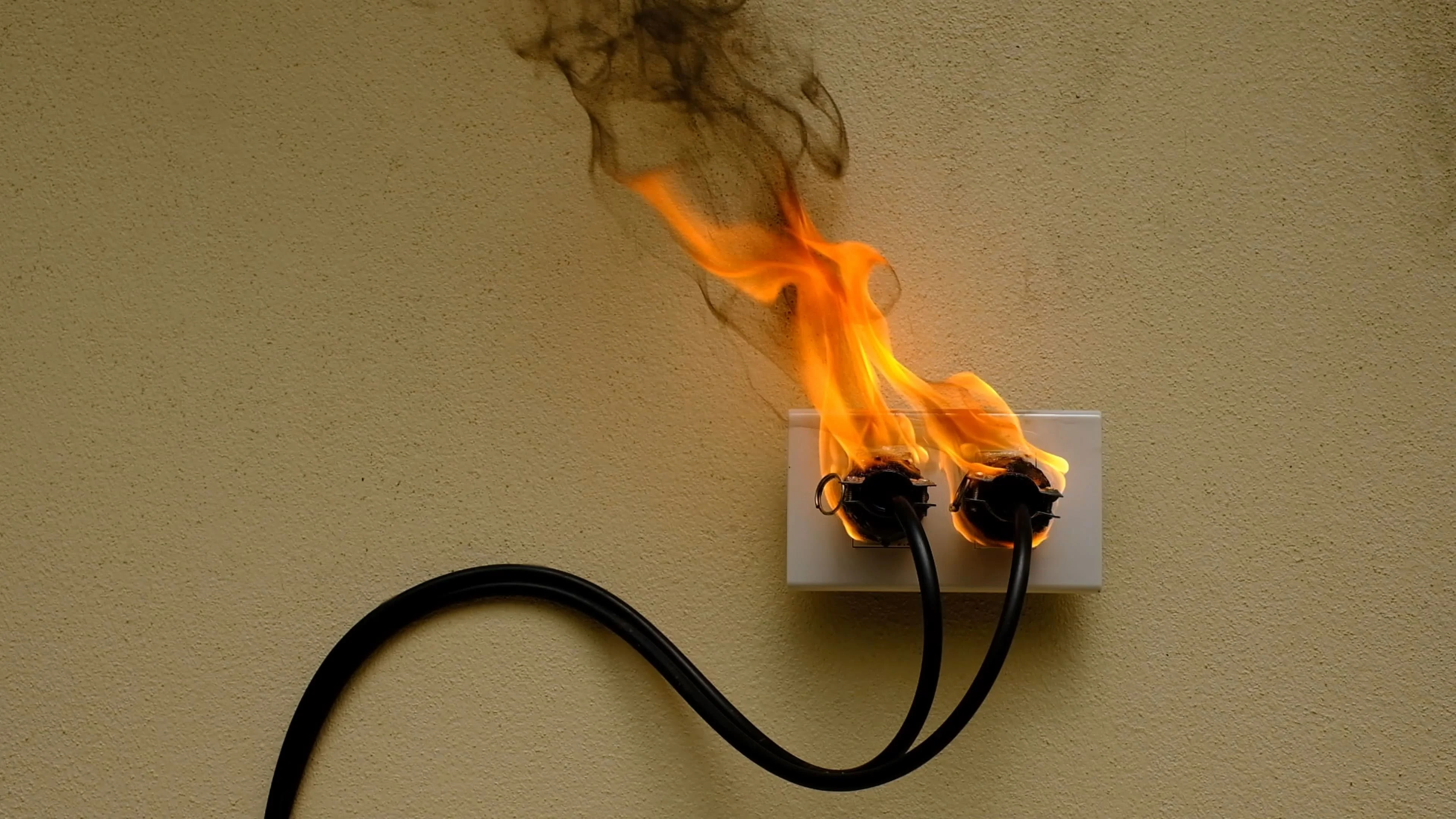
Few things in fire investigations are as complex and fascinating as electrical arcing. It’s a tiny, high-energy phenomenon that can spark catastrophic fires or help pinpoint a fire’s origin. As a fire investigator, understanding electrical arcing is essential. But how do you distinguish it from other electrical failures? What evidence should you look for at the scene?
This guide takes a deep dive into electrical arcing—what it is, the clues it leaves behind, and how you can analyze it effectively. By mastering this critical skill, you’ll add a powerful tool to your investigative arsenal.
Electrical arcing occurs when an electric current jumps through the air between two conductive surfaces. This leap generates intense heat, light, and sometimes even sound. It’s like a mini lightning bolt, powerful enough to melt metal or ignite nearby combustibles.
In fire investigations, arcing is both a potential cause of fires and a clue left behind by electrical systems exposed to fire. Recognizing its patterns is critical to determining whether arcing initiated the fire or resulted from it.
Understanding the conditions that lead to arcing can help you spot it at the scene. Electrical arcing requires:
- Voltage Potential: A difference in electrical charge creates the force necessary for the current to leap.
- Break in Insulation: Damaged wires or connectors expose conductive surfaces.
- Proximity of Conductors: Arcing occurs when conductive surfaces are close enough for the current to jump but not touching.
- Ionized Pathway: The air between the conductors becomes ionized, enabling the current to pass through.
Common causes of electrical arcing include loose connections, damaged insulation, and overloaded circuits.
To determine whether electrical arcing played a role in a fire, look for these key indicators:
- Beading on Conductors: When arcing occurs, the intense heat can melt and resolidify metal, forming rounded beads on wires.
- Burn Patterns: Arcing often leaves localized burn marks or “nick” patterns near the affected area.
- Pitted or Scorched Surfaces: Conductors or nearby objects may show small pits or scorches from the high-energy discharge.
- Thermal Damage Without Combustion: Arcing can cause extreme heat damage even in the absence of flames.
- Nearby Combustibles: Evidence of ignition in materials near the arcing site may indicate it was the fire’s source.
Distinguishing causative arcing from resultant arcing is the central analytical challenge in electrical fire investigation. Both produce physically similar evidence (beading, pitting, and conductor damage) but the differences are identifiable under examination and are critical to establishing whether electrical arcing was the ignition source or a consequence of the fire.
The scientific basis for this distinction lies in the oxygen environment at the time of arcing. When arcing occurs before a fire in a normal atmosphere, the resulting bead forms in an oxygen-rich environment. When arcing occurs during or after a fire, the surrounding combustion consumes available oxygen, producing a different bead microstructure. NFPA 921 identifies the metallographic analysis of arc beads as the primary method for distinguishing between the two.
Causative arc beads (fire-causing) typically show:
- A surface layer containing numerous voids formed during rapid solidification
- An intermediate layer that did not fully melt but recrystallised
- A sharp line of demarcation between the melted and unmelted conductor surfaces
- Localised damage confined to a specific fault point, with intact insulation in adjacent areas
Resultant arc beads (fire-resulting) typically show:
- More uniform recrystallisation throughout the bead structure
- Damage distributed across multiple conductor locations consistent with fire progression reaching that area
- Surrounding components showing generalised thermal damage before the arc occurred
- Higher copper oxide content from arcing in an oxygen-depleted fire atmosphere
Field examination alone is rarely sufficient to make this determination definitively. Laboratory analysis using microscopy and, where warranted, metallographic sectioning provides the level of certainty required for court-ready conclusions. NFPA 921 Chapter 9 provides the investigative framework, including the use of arc mapping to establish the sequence in which electrical faults occurred, with faults furthest downstream from the panel typically representing those closest to the fire's origin.
Follow these five steps when you’re investigating a scene with electrical arcing to ensure you don’t miss out on important evidence.
Step 1: Secure and Document the Scene
- Establish a perimeter to prevent contamination of electrical evidence.
- Photograph and sketch the scene, focusing on electrical systems and components.
Step 2: Identify Potential Arcing Sites
- Examine wiring, outlets, and appliances for beading, pitting, or burn marks.
- Look for exposed conductors or damaged insulation near combustibles.
Appliance investigations present a particular challenge: the arcing evidence is contained within a sealed unit where water damage, heat cycling, and component layering all compress the evidence into a tight space. Dishwasher fires are a prime example — see our dishwasher fire investigation guide for how these principles apply to enclosed appliance scenes.
Step 3: Collect Evidence
- Carefully remove and label electrical components for further analysis.
- Ensure chain-of-custody protocols are followed to preserve evidentiary integrity.
Step 4: Perform Laboratory Analysis
- Use microscopes to examine pitting and beading patterns closely.
- Conduct material analysis to confirm the presence of melted or vaporized metals.
Step 5: Correlate Findings
- Cross-reference arcing evidence with burn patterns and fire spread.
- Consult with forensic engineers or electrical experts to validate conclusions.
By following these steps, you can build a strong case based on thorough and methodical evidence analysis.
Analyzing arcing evidence isn’t without its challenges. Here’s what you might face:
- Post-Fire Damage: Heat from the fire can mimic arcing effects, making it difficult to differentiate cause from result.
- Destruction of Evidence: Intense fires may obliterate wires or components, erasing key evidence.
- Complex Electrical Systems: Modern buildings have intricate networks, complicating fault identification.
- Misinterpreting Patterns: Non-electrical heat damage can create similar marks, leading to potential misidentification.
Overcoming these hurdles requires expertise, experience, and collaboration with specialists.
In complex cases, this expertise may also include recognizing extreme fire phenomena such as a BLEVE explosion, particularly when electrical faults ignite fires near pressurized flammable liquids or a vapor cloud explosion, where an arc occurring within or at the boundary of a dispersed flammable gas cloud triggers a pressure wave rather than a simple ignition event.
Whether you’re a new fire investigator or a seasoned professional, there are several resources available to help you learn more about identifying electrical arcing.
Pursue Advanced Training
- Enroll in specialized courses focused on electrical fire investigations.
- Gain certifications such as the NAFI Certified Fire & Explosion Investigator (CFEI).
Stay Current with Technology
- Familiarize yourself with advanced diagnostic tools like thermal imaging cameras and spectrometers.
- Keep up with emerging trends in electrical systems and materials.
Study Past Cases
- Analyze investigations where electrical arcing was a factor. Look for patterns and strategies to apply in your own work.
Collaborate with Experts
- Work closely with electrical engineers, forensic scientists, and fire protection specialists to broaden your understanding.
Electrical arcing is both a challenge and an opportunity for fire investigators. Its distinct patterns can provide critical clues about a fire’s origin and cause—if you know what to look for.
By understanding the science, recognizing the signs, and honing your investigative skills, you can turn electrical arcing evidence into powerful insights. With diligence and expertise, you’ll uncover the truth behind even the most complex fire scenes.
What is the difference between electrical arcing and a short circuit?
A short circuit occurs when current travels along an unintended path, typically when two conductors of different potential make direct contact. Electrical arcing is a specific type of fault where current jumps across a gap through ionised air rather than through a conductor. A short circuit can produce arcing, but arcing can also occur without a conventional short circuit, for example, when deteriorated insulation allows current to track along a contaminated surface. In fire investigation, both phenomena leave physical evidence, but arcing produces the distinctive beading and pitting patterns that are most diagnostically useful for identifying electrical ignition sources.
Can electrical arcing occur without causing a fire?
Yes. Many arcing events are interrupted by circuit protection devices (circuit breakers and fuses) before enough heat is generated to ignite surrounding combustibles. The arc itself may produce thermal damage to conductors without a sustained ignition. In fire investigation, the presence of arc evidence does not by itself establish that arcing was the cause of the fire. The investigator must establish that the arcing occurred in proximity to combustible material, that the energy released was sufficient to cause ignition, and that the arcing preceded rather than resulted from the fire.
How do investigators distinguish arc beads from fire-melted copper?
The distinction requires examining the microstructure of the melted copper under magnification. Arc beads formed before a fire (/called fire-causing arc beads) show a surface layer with voids, a recrystallised intermediate layer, and a sharp demarcation line between melted and unmelted copper. Fire-melted copper and resultant arc beads formed during a fire tend to show more uniform recrystallisation without that sharp boundary. Babrauskas (2017) described this three-layer structure as a reliable indicator of pre-fire arcing. NFPA 921 identifies metallographic analysis as the standard method for making this distinction, and laboratory examination is typically required for court-admissible conclusions.
What is arc mapping and how is it used in fire investigation?
Arc mapping is the systematic documentation of all electrical arc sites on a circuit to establish the sequence in which faults occurred and locate the area closest to the fire's origin. Because fire-resulting arcing progresses as the fire burns outward from its origin, the arc faults furthest downstream from the electrical panel, those with the least protection, typically represent the faults that occurred earliest, closest to where the fire started. Arc mapping is recognised under NFPA 921 as a valid fire investigation methodology. It is fundamentally pattern recognition rather than electrical engineering, though complex cases involving available short-circuit current calculations may require an electrical engineer. For a detailed methodology guide, see the arc mapping guide for fire investigators.
Does electrical arcing always trip a circuit breaker?
No. Circuit breakers are designed to respond to overcurrent, specifically, to sustained current above the rated amperage of the circuit. Arcing faults do not always draw enough sustained current to trip a standard breaker, particularly series arc faults where the arc occurs in a break within a single conductor rather than between two conductors. This is why arc fault circuit interrupters (AFCIs) were developed and are now required by the National Electrical Code in many residential applications, they detect the characteristic waveform signature of arcing rather than just overcurrent. At a fire scene, the absence of a tripped breaker does not rule out arcing as the ignition source.
What does NFPA 921 say about electrical arcing evidence?
NFPA 921 Chapter 9 covers electrical fire investigation in detail. It identifies arc beads as physical evidence of electrical arcing and establishes metallographic analysis as the standard method for distinguishing causative from resultant arcing. NFPA 921 also establishes arc mapping as a recognised investigative technique for locating the area of origin using the sequence of electrical faults. Critically, NFPA 921 requires that investigators eliminate alternative hypotheses, including the possibility that arcing resulted from rather than caused the fire, before concluding that electrical arcing was the ignition source. Conclusions that attribute fire cause to electrical arcing without this elimination analysis are vulnerable to Daubert challenge.


Trusted by Public and Private Investigator Teams Everywhere
Whether you're a big state agency, a small local fire department or somewhere in between, Blazestack software (NFPA 921® & CJIS compliant) collects fire scene data and generates standardized origin and cause reports in a fraction of the time of other methods.
To learn more about Blazestack, give us a call at (866) 303-4344 or email us at support@blazestack.com
Get Your Free 14-Day Trial and Custom Price Quote Now
We'll let Blazestack do the talking. Try it out right now for free.
A member of our staff will be in touch shortly.