Dishwasher Fire Investigation: When Your Kitchen is a Crime Scene
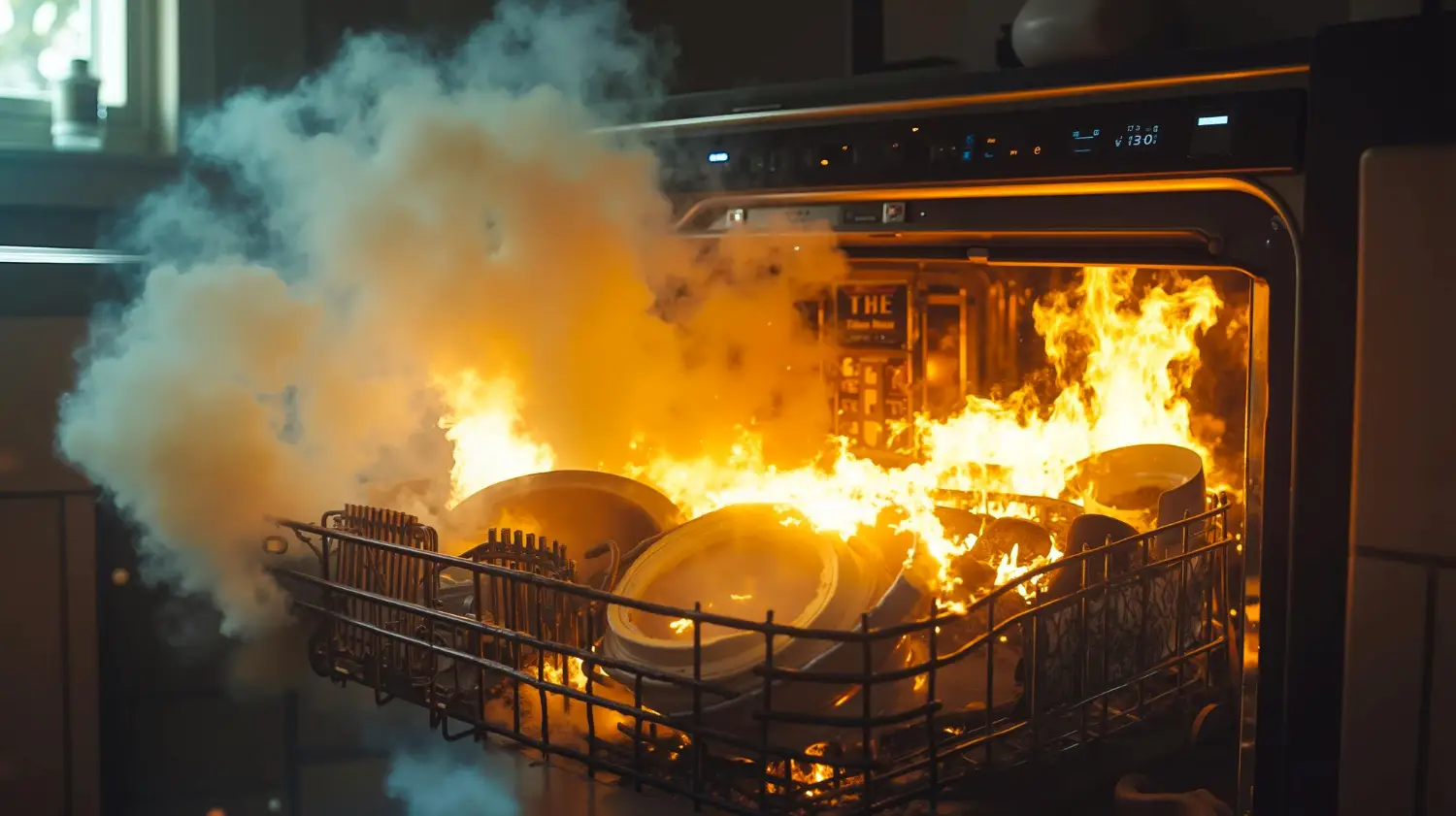
After fifteen years as a Fire Investigator, dishwashers still catch me off guard. You'd think these everyday kitchen helpers would be pretty safe, right? Wrong. They cause about 1,200 house fires every year according to the National Fire Protection Association (NFPA), and investigating them is like solving a puzzle where half the pieces are melted. And this is why Dishwasher Fire Investigation is a much needed expertise these days.
Here's what makes these cases tricky: imagine trying to figure out what went wrong in a sealed box that contains electricity, scalding water, and heating elements hot enough to melt plastic. Traditional fire investigation techniques? They don't work here. You're dealing with electrical systems, high-temperature elements, and water circulation all packed into a tight space where evidence can be obscured, damaged, or completely destroyed by the time I arrive.
Dishwashers seem pretty harmless sitting there in your kitchen, waiting for dirty pots. But pack electrical components, heating elements that get scorching hot, and water circulation into a tight space, and you've got a recipe for trouble that most people never see coming.
Here's what I've learned after pulling apart dozens of these machines: when things go south in a dishwasher, they go wrong fast. Unlike a typical kitchen fire that has room to breathe and grow, dishwasher fires smolder and build heat in that enclosed space until, boom, they break out into something much worse.
The tricky part? The same enclosed environment that makes these fires dangerous also makes them hard to investigate. Water damage, electrical components, and fire damage all mixed together create a mess that tells a story, if you know how to read it.
When I arrive at a scene, I rely on systematic fire scene investigation checklists because missing one detail in these complex cases can derail everything.
Most dishwasher fires start with electrical problems. After examining hundreds of control boards, wire harnesses, and door switches, I can tell you the failure patterns are surprisingly predictable.
Research shows that faulty appliances account for 15% of all appliance fires, with approximately 43 faulty appliance fires occurring each week in England according to electrical contracting industry data. These numbers underscore why understanding electrical system failures is crucial for investigators.
When Control Boards Go Rogue
Think of the control board as your dishwasher's brain, and like any brain, when it fries, everything goes to hell. I've pulled apart control boards that looked like someone took a blowtorch to them. Solder joints melted, capacitors blown, relay switches fused together.
The key is figuring out what failed first. Sometimes a relay coil overheats and cascades into other components. I look for specific burn patterns radiating outward from the failure point. In one recent case, a three-year-old dishwasher showed massive thermal damage around the relay switches, but the telltale burn pattern starting at the relay mounting point told me exactly where it began.
Understanding electrical arcing patterns helps me distinguish between what caused the fire versus what got damaged because of it. That distinction can make or break a case.
Why Wiring Goes Bad Over Time
Dishwasher wiring takes a beating, constant heat cycles, moisture, vibration from wash pumps. It's not exactly a spa environment for electrical components. Over time, that wire insulation starts breaking down in ways you can predict.
I've found wiring so degraded it was basically held together by hope and electrical tape. When insulation fails, you get exposed conductors that arc against the metal frame. The heat generated can easily ignite nearby materials.
What I Check Every Time:
☐ Wire insulation for cracking or brittleness
☐ Exposed conductors at stress points
☐ Arc patterns or burn marks
☐ Any amateur repairs (always a red flag)
☐ Grounding connections for corrosion
☐ Test continuity before disturbing connections
☐ Photograph wire routing before disassembly
Door Switch Problems Nobody Talks About
Door switches might seem minor, but they're critical safety devices. When they fail, bad things happen fast. The wiring gets flexed thousands of times as doors open and close. Eventually, something gives.
As an expert, I've investigated fires where faulty door switches let the dishwasher run with the door open, or where the switch itself became the ignition source. Metal fatigue, insulation breakdown, loose connections, they all generate heat that can ignite surrounding materials.
The Dry Firing Disaster
Here's something that should scare every homeowner: heating elements are designed to operate underwater. When they don't have water coverage, they can hit temperatures that make your oven look cool, we're talking over 1,000°F in some cases.
Dry firing happens when the pump fails, water runs low, or debris blocks circulation. Suddenly you've got a superheated element next to plastic components that start melting at 200 degrees. The temperature differential creates a recipe for disaster.
I worked on one case where the homeowner ignored a clogged drain for months. When the pump finally seized from debris buildup, the heating element kept running without water during a normal cycle. It hit over 1,200°F, melted through the plastic tub, and ignited the wooden cabinet above. The melted plastic pattern radiating from the element made the cause obvious.
When Element Housings Crack
Element housings keep the hot parts away from everything else. When they crack, you essentially have an exposed heating coil sitting in your dishwasher. Sometimes it's thermal cycling stress, the constant heating and cooling puts stress on the housing material. Other times, it's manufacturing defects or improper installation that creates weak points.
The protective barrier that prevents direct contact between heating elements and combustible materials is gone. Age and mineral deposits can also contribute to housing degradation over time.
Pump Motors That Overheat
Wash pump motors work incredibly hard, constantly dealing with food debris in hot, humid conditions. When filters clog or something jams the impeller, these motors overheat fast and catastrophically.
I've found pump motors where the windings were completely burned out, housing cracked from thermal expansion, and surrounding plastic melted. The motor basically cooked itself and everything nearby. An overworked pump can easily exceed ignition temperatures of surrounding materials.
Water Leaks That Create Electrical Chaos
Water and electricity don't play nice, but dishwashers force them to work together. When that relationship breaks down through leaks or failed seals, you get spectacular electrical failures that generate serious heat.
The challenge? Determining if water damage happened before the fire (and maybe caused it) or during the fire from firefighting efforts. That timeline can make or break a case. Recent litigation shows how "investigators found that wiring inside the door harness overheated and ignited" according to Law Commentary, demonstrating how electrical failures can occur even when appliances aren't actively running.
Supply Line Failures That Complicate Everything
Ruptured supply lines can flood electrical components, but they also mask fire evidence. I've worked cases where a supply line rupture looked like the main problem, when an electrical fire had weakened the line first.
Getting the sequence right is crucial: Did the leak cause the electrical failure, or did electrical failure generate enough heat to damage the water line? The answer affects insurance coverage and liability.
Photography That Tells the Story
You can't investigate what you can't see, and you can't remember everything. That's why systematic photography is absolutely critical. I start with wide shots showing the whole kitchen and work my way in, documenting every detail before touching anything.
Professional fire scene photography techniques preserve scene integrity for later analysis. The progressive disassembly photos are crucial, they show each teardown step, component positions, wire routing. Once you start taking things apart, you can never put them back exactly the way they were.
My Photography Protocol:
☐ Overall scene with dishwasher in context
☐ Four-sided exterior documentation
☐ Door open showing interior damage
☐ Control panel and display conditions
☐ Utility connections (water, electrical, drain)
☐ Progressive disassembly sequence
☐ Individual component close-ups with scale
☐ Wire routing before disconnection
☐ Serial number and model identification
Handling Components Without Ruining Evidence
Electrical components are fragile evidence. Static electricity damages circuits, moisture causes corrosion, rough handling creates new damage that looks like fire damage.
I use anti-static bags for circuit boards, photograph every connection before disconnecting, and label everything with its original position. Proper chain of custody procedures keep evidence legally admissible from collection through lab analysis.
Working with testing labs early is key. They need to know what questions we're trying to answer so they can design appropriate tests and preserve the right evidence.
Reading Fire Patterns in Tight Spaces
Fire patterns in dishwashers don't follow open-space fire rules. You're dealing with confined environments where heat builds differently, oxygen supply is limited, and materials behave unexpectedly.
Understanding burn pattern analysis in confined appliance spaces requires different approaches than traditional methods. Plastic deforms and melts in patterns pointing toward heat sources. Metal oxidizes and discolors showing temperature and duration. But you must account for how dishwasher design affects these patterns.
The ventilation system, door seals, and any breach points all affect how the fire develops. Understanding these factors helps establish timeline and intensity patterns crucial for determining cause.
Manufacturing Defects vs. Normal Wear
Not every component failure is a manufacturing defect. Sometimes dishwashers wear out, get overloaded, or aren't maintained properly. I compare failed components with new ones from the same production run when possible.
Manufacturing defects show up as consistent problems across multiple units. Wear-related failures tend to be more random. Maintenance history matters too, a machine with dirty filters for years is more likely to have pump problems.
Environmental Factors That Accelerate Failure
Power quality issues stress electrical components. Hard water creates mineral buildup affecting heating elements. Poor installation creates stress points leading to premature failure.
I've seen voltage fluctuations from the electrical grid repeatedly stress control boards until catastrophic failure. Other cases where mineral deposits from hard water created hot spots on heating elements that eventually led to housing failures.
In one suburban case, frequent power outages caused voltage spikes that stressed the dishwasher's control board over months. The homeowner's surge protector wasn't rated for the appliance's power draw. Each spike gradually degraded the board's capacitors until they failed during a normal wash cycle, igniting nearby wire insulation.
3D Documentation That Preserves Everything
3D scanning has completely changed how I document fire scenes. Instead of describing spatial relationships with words and 2D photos, I create precise digital models preserving everything.
These scans are incredibly detailed, you can measure distances, angles, and relationships with millimeter accuracy. For expert testimony, walking a jury through virtual scene reconstruction is incredibly powerful. I can also revisit scenes virtually months later when preparing reports or testimony.
Database Integration for Pattern Recognition
Access to databases of similar incidents, recalls, and defect patterns provides context individual investigations can't. If I'm seeing a control board failure matching dozens of other cases, that's significant information.
These systems help identify if you're dealing with an isolated incident or part of a larger failure pattern. Data from the National Fire Protection Association shows that between 2014 and 2018, there were an estimated 1,700 home incidents involving dishwashers each year, with approximately 23% resulting in structural damage according to appliance safety research.
Laboratory Testing That Provides Definitive Answers
Laboratory testing takes investigation from educated guessing to scientific certainty. Electrical component testing shows exactly how and why parts failed. Material analysis determines ignition temperatures and burn characteristics.
The key is asking the right questions and providing proper context. Labs need to understand what you're trying to prove so they can design appropriate tests and preserve the right evidence.
I've had cases where lab testing completely changed my understanding. Components that looked like obvious ignition sources were fire victims, while seemingly minor damage revealed the actual cause.
NFPA 921 sets the standard for fire investigation methodology, and courts expect compliance. This means following the scientific method, considering alternative hypotheses, and basing conclusions on evidence rather than speculation.
NFPA 921 Compliance Isn't Optional
Understanding NFPA 921 standards ensures reports meet legal requirements and withstand litigation scrutiny. You must document methodology, explain why you eliminated alternative causes, and show how evidence supports conclusions. Having the right answer isn't enough, you need to show how you got there using accepted scientific principles.
Preparing for the Witness Stand
Juries don't have engineering degrees, but they need to understand what happened. Good visual aids become necessary, diagrams showing how electrical systems work, animations demonstrating fire development, before-and-after photos telling the story clearly.
The goal isn't impressing people with technical complexity, it's making complex concepts accessible. A simple diagram showing heating element overheating can be more powerful than pages of technical explanation.
My Testimony Prep Checklist:
☐ Review all evidence and testing results
☐ Prepare simplified technical explanations
☐ Create clear visual aids and diagrams
☐ Practice testimony timing
☐ Anticipate cross-examination questions
☐ Verify credentials documentation
☐ Ensure NFPA 921 compliance
☐ Prepare alternative scenario responses
Cross-Examination Readiness
Cross-examination stress-tests your investigation. Opposing attorneys challenge methodology, propose alternative theories, and question credentials. Being prepared means knowing your evidence inside and out.
Proper origin and cause report writing helps prepare comprehensive documentation that withstands rigorous cross-examination. I practice explaining conclusions in different ways, anticipate methodology challenges, and prepare responses to alternative theories.
Stay calm and stick to what evidence shows. Your credibility depends on being honest about limitations while clearly explaining what you can conclude based on evidence.
Managing complex dishwasher fire investigations means juggling evidence photos, component tracking, lab coordination, and report generation, all while maintaining NFPA 921 compliance. Traditional methods often leave investigators drowning in paperwork and struggling to maintain proper documentation standards.
Blazestack's fire investigation platform streamlines this entire process with tools designed specifically for appliance fire investigations. The platform's automated photo logging ensures you never miss critical evidence documentation, while evidence chain of custody tracking maintains legal defensibility throughout your investigation.
What sets Blazestack apart is understanding appliance fire investigation workflows. The platform includes NFPA-compliant report templates, collaborative case management features, and integration capabilities that connect your field documentation with laboratory testing coordination.
Dishwasher fire investigation combines electrical engineering, fire science, and detective work in ways that challenge even experienced investigators. These appliances create unique fire scenarios where traditional investigation methods need adaptation for confined spaces, complex electrical systems, and water-fire interactions.
Ready to streamline your dishwasher fire investigations? Try Blazestack free today and discover how our platform can transform your investigation workflow while ensuring every case meets the highest professional standards.

Trusted by Public and Private Investigator Teams Everywhere
Whether you're a big state agency, a small local fire department or somewhere in between, Blazestack software (NFPA 921® & CJIS compliant) collects fire scene data and generates standardized origin and cause reports in a fraction of the time of other methods.
To learn more about Blazestack, give us a call at (866) 303-4344 or email us at support@blazestack.com
Get Your Free 14-Day Trial and Custom Price Quote Now
We'll let Blazestack do the talking. Try it out right now for free.
A member of our staff will be in touch shortly.