Negative Corpus in Fire Investigation: What NFPA 921 Says

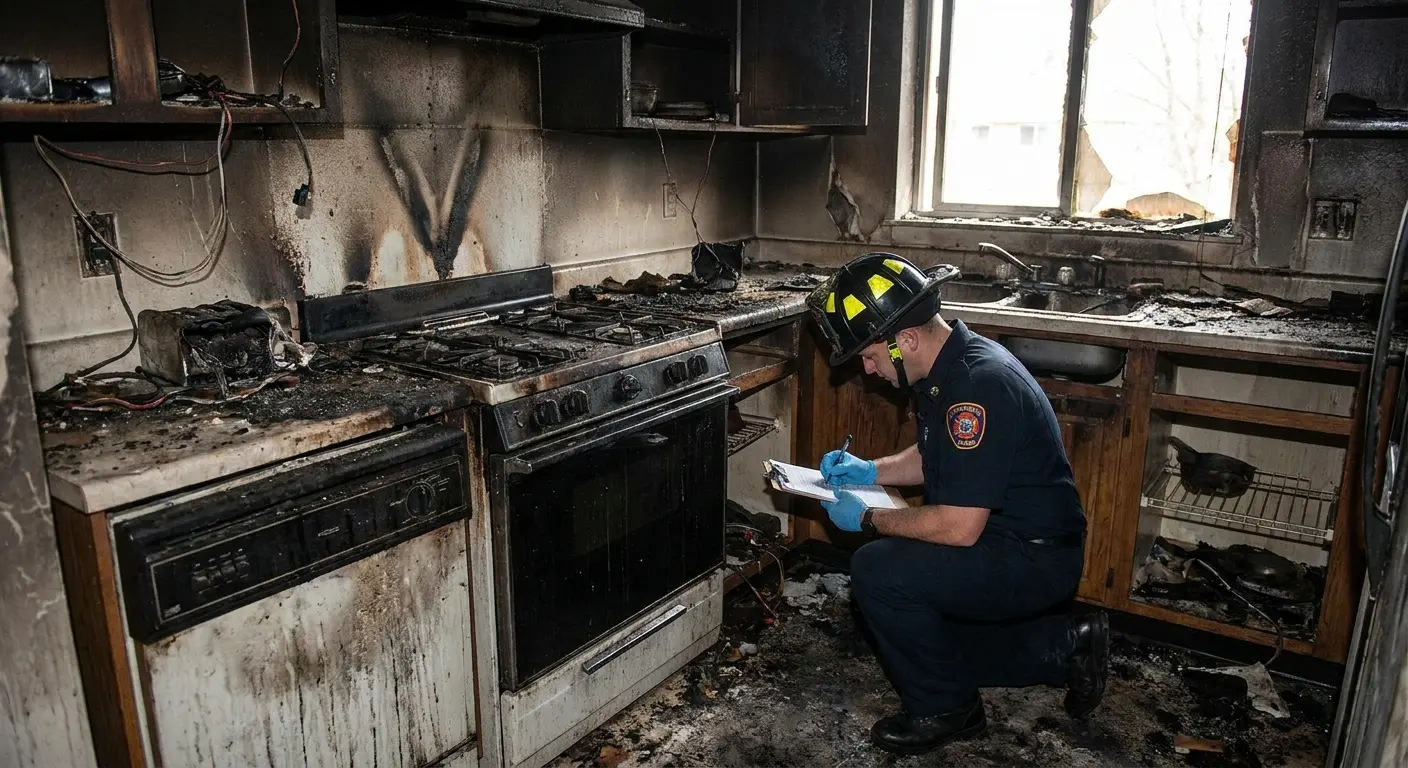
Negative corpus is a method of determining a fire's cause by eliminating identified accidental and natural causes, then treating the absence of an alternative explanation as proof of an incendiary origin. Consider a residential kitchen fire where the area of origin sits near the stove. A negative corpus approach documents that the stove was off, no candles were present, and the electrical panel showed no signs of failure, then concludes the fire was set intentionally, despite finding no pour patterns, no ignitable liquid residue, and no witness testimony suggesting deliberate ignition.
The conclusion rests entirely on what was not found rather than on any positive indicator that someone deliberately set the fire. The methodology's core flaw is straightforward: it treats an investigator's inability to identify a cause as proof of a specific cause, arson, rather than as a limitation on what the evidence can support.
Fire suppression activities, flashover, and full room involvement all destroy evidence. Negative corpus cannot distinguish between a cause that did not occur and a cause whose evidence was destroyed before the investigator arrived. That distinction is central to why courts, prosecutors, and defense attorneys treat elimination-based conclusions with skepticism.
Affirmative cause determination builds conclusions on what an investigator finds: physical evidence at the point of origin, an identifiable ignition source, witness statements that support the findings, and fire dynamics analysis that explains the observed burn patterns. It constructs a positive case, supported by evidence that makes one explanation more probable than the alternatives.
Negative corpus works in reverse. It starts with a list of possible causes, eliminates them one by one, and treats whatever remains as the conclusion by default. Absence of evidence is not evidence of absence, and a list of ruled-out possibilities is not itself proof of what happened.
The scientific method of fire investigation requires testable, falsifiable hypotheses. Negative corpus offers neither. An investigator cannot verify that every possible cause has truly been eliminated, since that verification depends entirely on the limits of the investigator's own knowledge. A cause the investigator never considered will never be part of the elimination process, and the resulting conclusion carries that blind spot without any way for the method itself to reveal it.
The methodology also reverses the burden of proof. Instead of demonstrating why evidence points to arson, it declares arson because something else has not been proven. This is not consistent with scientific investigation or with the legal standards courts apply to expert testimony.
Negative corpus is also vulnerable to confirmation bias. An investigator who arrives at a scene already suspecting arson may search less thoroughly for accidental explanations and document them less completely, compromising the elimination process from the outset.
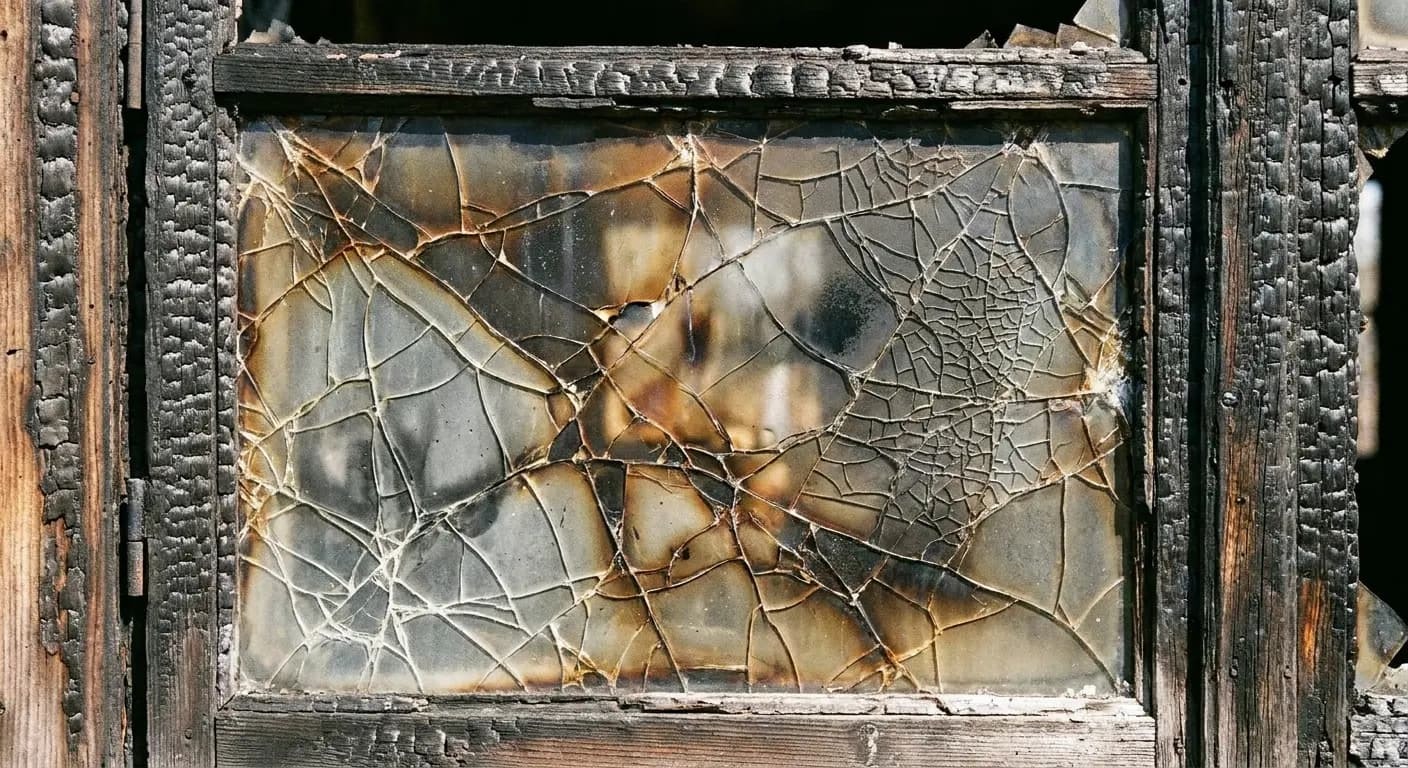
Fire science's own history illustrates the risk. Through the 1980s and 1990s, investigators commonly treated indicators such as crazed glass, low burning, and multiple points of origin as reliable evidence of arson. Later fire dynamics research established that these same patterns can occur in accidental fires, including through flashover and ventilation-controlled burning. Investigators who eliminated accidental causes based on those since-discredited indicators produced conclusions that fire science no longer supports.
NFPA 921, the primary guide for fire and explosion investigations, explicitly rejects negative corpus. It states that determining a fire cause requires identifying the ignition source, the material first ignited, and the circumstances that brought them together, an affirmative requirement rather than an elimination process. Conclusions must rest on facts, not on the absence of facts.
The guide also clarifies that references in legal definitions of arson to "eliminating other causes" do not endorse elimination as an investigative methodology. When affirmative evidence of an incendiary cause exists, that evidence should be strong enough that other explanations can be excluded based on the positive findings, not based on the absence of alternatives.
NFPA 921 makes clear that "undetermined" is the correct conclusion when available evidence does not support a specific cause. Investigators are not required to select from remaining possibilities after eliminating others; they are required to base conclusions on what the evidence affirmatively shows. NFPA 1033, the companion standard governing investigator qualifications, likewise does not recognize elimination-based reasoning as a valid investigative technique.
Negative corpus reasoning has contributed to documented wrongful convictions. Cameron Todd Willingham was executed by the state of Texas in 2004 for a fire that killed his three children, a determination built substantially on arson indicators that modern fire science has since discredited. Independent reviews conducted after his execution, including expert analysis commissioned by the Texas Forensic Science Commission, concluded that the physical evidence did not support a finding of arson. Texas has not issued a formal exoneration, and the case remains a documented example of how elimination-based reasoning and outdated fire science can combine with severe consequences.
Han Tak Lee spent 24 years in a Pennsylvania prison after being convicted in 1990 of setting a fire that killed his daughter. A federal judge vacated his conviction in August 2014, finding that the arson science relied on at trial had since been discredited, and Lee was released that same month after prosecutors declined to retry the case.
These cases, among others identified by organizations including the Innocence Project, illustrate a broader pattern: courts and fire science researchers have grown increasingly skeptical of conclusions built on elimination reasoning rather than affirmative evidence, particularly as understanding of fire dynamics has advanced.
Systematic scene examination should precede conclusions, not follow them. Photographing the scene from multiple angles and documenting burn patterns and physical evidence in detail establishes the area of origin through convergence of fire dynamics indicators, not through elimination, consistent with the origin and cause investigation methodology outlined under NFPA 921.
Witness interviews provide context on pre-fire conditions, activities, and potential ignition sources that physical evidence alone may not reveal. Fire dynamics analysis clarifies how ventilation, fuel load, and fire progression produced the observed damage, reducing the risk of misreading flashover effects or ventilation-controlled burning as arson indicators. Accelerant detection results should support a conclusion rather than drive it, since residual petroleum products from building materials or household products can produce positive results without indicating arson.
Affirmative Investigation Checklist
- Document area of origin identification through convergence of fire dynamics indicators
- Photograph and diagram burn patterns, damage progression, and physical evidence
- Identify all items and potential ignition sources present in the area of origin
- Document the condition and position of each potential ignition source
- Conduct witness interviews regarding pre-fire conditions, activities, and observations
- Perform fire dynamics analysis explaining observed patterns and damage
- Collect physical evidence samples where appropriate with proper chain of custody
- Document the ignition sequence with supporting physical and testimonial evidence
- Explain why the identified cause is more probable than alternatives based on positive evidence
- Record alternative hypotheses considered and the evidence-based reasons for their exclusion
- Classify as undetermined when evidence is insufficient for a specific cause determination
Classifying a fire as undetermined when evidence does not support a specific cause is not a failure. It reflects the limits of what suppression damage, incomplete scenes, or absent witness information can support, and it is what NFPA 921 requires when the evidence does not point clearly to a specific conclusion.
Daubert v. Merrell Dow Pharmaceuticals established the standard federal courts use to evaluate the reliability of scientific expert testimony, a standard many state courts have since adopted. Navigating Daubert challenges is a recurring concern for investigators whose conclusions may face this kind of scrutiny. Judges act as gatekeepers, assessing whether an expert's methodology can be tested, has been subjected to peer review, has a known error rate, and is generally accepted in the relevant field before allowing the testimony.
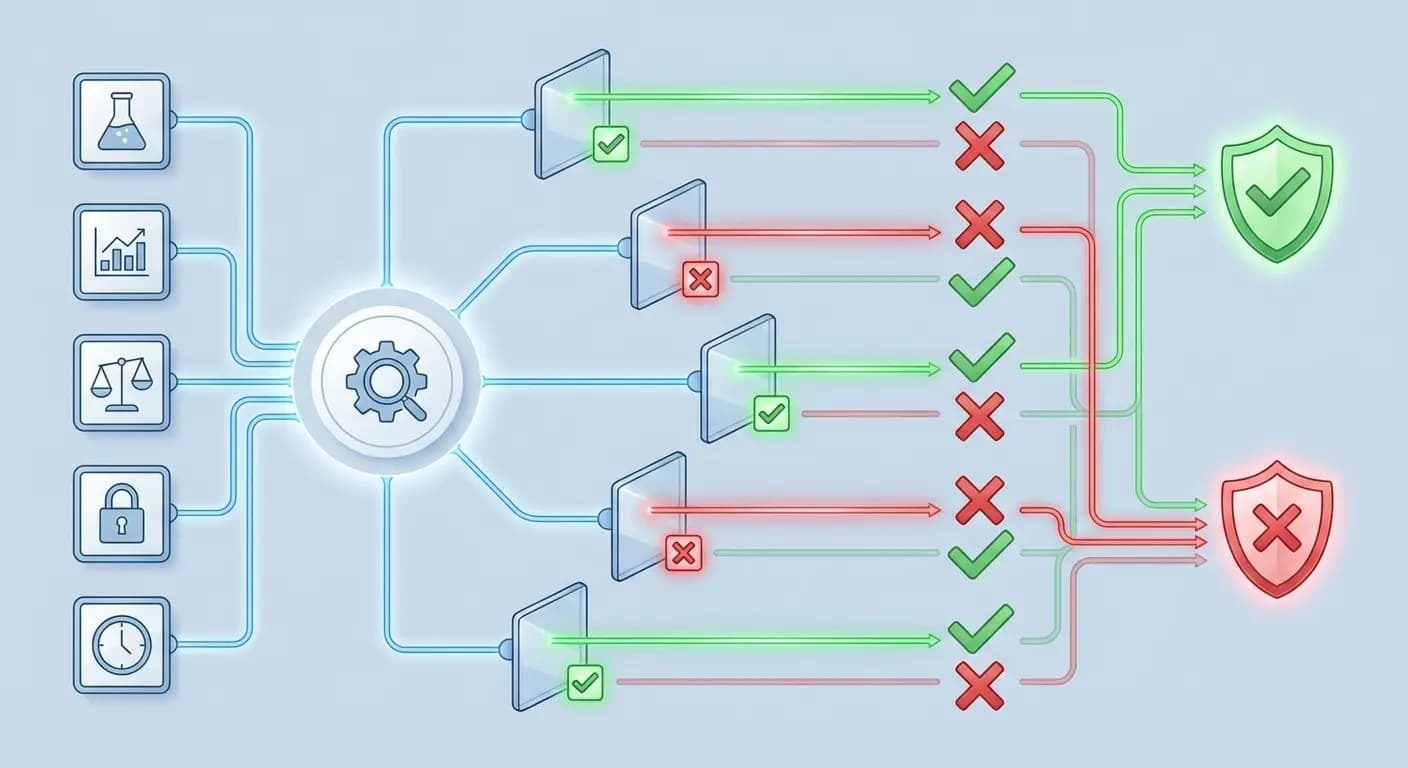
Courts have grown more willing to exclude fire investigator testimony when a conclusion rests on elimination reasoning rather than affirmative evidence. Prosecutors have become more cautious about bringing arson charges built primarily on elimination reasoning, and defense attorneys routinely challenge such conclusions through cross-examination that exposes the method's inability to confirm every possible cause has been ruled out, or to account for evidence that fire suppression may have destroyed.
Certain patterns in an investigation report reveal elimination-based reasoning even when the report does not use the term "negative corpus" explicitly.
- "All other causes have been eliminated" stated without corresponding documentation of affirmative evidence
- "No accidental cause could be identified" followed immediately by an incendiary determination
- Extensive discussion of ruled-out causes paired with minimal description of positive evidence
- A conclusions section that emphasizes the absence of alternatives rather than the presence of indicators
- Classification as incendiary despite the report noting that suppression damage destroyed evidence in the area of origin
- Absence of fire dynamics analysis explaining how the observed patterns support the stated conclusion
- Reliance on traditional arson indicators without analysis of whether fire dynamics could produce the same effects accidentally
- "Could not rule out" language applied to arson while other causes are treated as definitively eliminated
When a report shows these patterns, the appropriate response is to evaluate whether affirmative evidence exists that could independently support the conclusion, even if the report did not frame it that way. If sufficient affirmative evidence is absent, reclassification to undetermined is the scientifically defensible outcome, even where a case has already advanced through prosecution or civil proceedings.
Comprehensive documentation is the practical safeguard against elimination-based reasoning. Recording the area of origin identification process, the condition and testing of potential ignition sources, detailed witness statements, and fire dynamics analysis builds a foundation for affirmative conclusions rather than a fallback on what was ruled out.
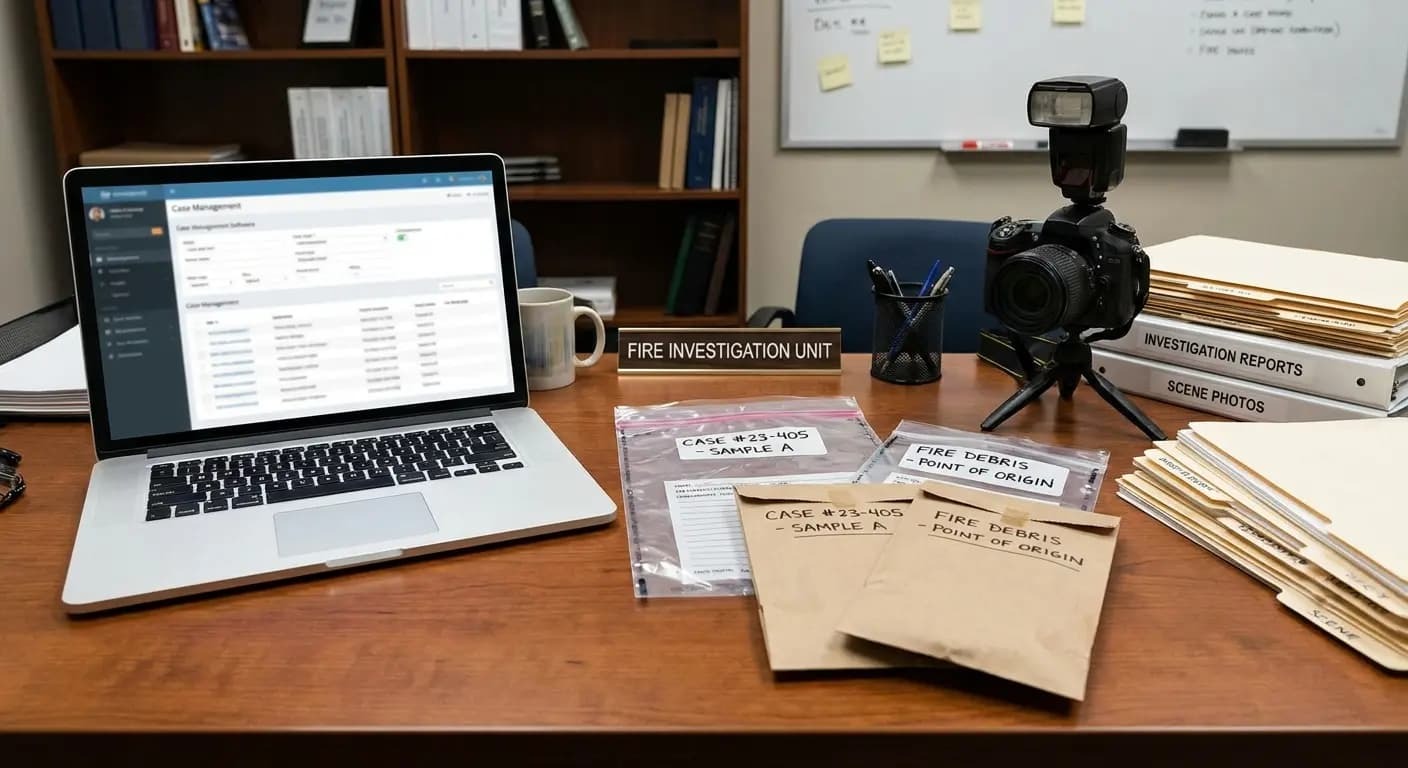
This level of documentation serves several purposes at once. It supports conclusions with affirmative evidence, demonstrates a systematic investigation, and provides material that withstands cross-examination and peer review. Maintaining this consistency across complex cases, with extensive evidence, multiple witnesses, and evolving information, requires organized case management.
Blazestack's evidence and media management tools support this kind of documentation by structuring case records around what investigators find rather than what they rule out: scene observations, witness statements, chain of custody, and investigative findings captured in a format aligned with affirmative, evidence-based determination.
Is there any situation where elimination-based reasoning is appropriate?
Eliminating a specific hypothesis is appropriate when supported by affirmative evidence that contradicts it, such as confirming an appliance was de-energized at the time of the fire. That is evidence-based elimination of one hypothesis, not negative corpus. The distinction is what supports the final conclusion: negative corpus is reached when a determination rests entirely on the elimination process itself, with no affirmative evidence pointing to the stated cause.
What should an investigator do when a specific cause cannot be identified?
Classify the fire as undetermined and document what was found, even where it does not point to a specific cause: the area of origin if identified, the condition of potential ignition sources, and witness or timeline information gathered. Explaining why available evidence is insufficient for a specific determination is a professionally defensible outcome under NFPA 921.
How should investigators explain an undetermined classification to prosecutors or insurance adjusters?
Framing the explanation around NFPA 921's requirement for affirmative evidence, and around the increasing likelihood that elimination-based conclusions will not survive a Daubert challenge, generally resonates with stakeholders who need a conclusion that will hold up under scrutiny rather than one that collapses under cross-examination.
How has negative corpus affected fire investigation's credibility as a field?
Wrongful convictions tied to elimination-based reasoning and outdated fire science brought sustained scrutiny to fire investigation testimony, prompting NFPA 921 revisions, updated training standards, and closer judicial review of investigator methodology. Rebuilding and maintaining that credibility depends on individual investigators continuing to base conclusions on affirmative evidence rather than elimination.
What resources support evidence-based fire investigation methodology?
NFPA 921 itself, IAAI's Certified Fire Investigator program, National Fire Academy courses, and fire dynamics research published by NIST and Underwriters Laboratories all support current, evidence-based investigative practice. Peer-reviewed publications such as Fire Technology provide ongoing research relevant to evolving fire science.
Final Thoughts
Negative corpus substitutes the absence of an alternative explanation for evidence of a specific one. NFPA 921 explicitly rejects it, contemporary fire dynamics research does not support it, and it has contributed to documented wrongful convictions. A defensible conclusion rests on what an investigator finds: physical evidence at the point of origin, an identifiable ignition source, fire dynamics analysis, and witness statements that support the determination. When that evidence does not exist, undetermined is the correct classification, not a failure to solve the case.

Trusted by Public and Private Investigator Teams Everywhere
Whether you're a big state agency, a small local fire department or somewhere in between, Blazestack software (NFPA 921® & CJIS compliant) collects fire scene data and generates standardized origin and cause reports in a fraction of the time of other methods.
To learn more about Blazestack, give us a call at (866) 303-4344 or email us at support@blazestack.com
Get Your Free 14-Day Trial and Custom Price Quote Now
We'll let Blazestack do the talking. Try it out right now for free.
A member of our staff will be in touch shortly.