Fire Load in Fire Investigation: Definition, Density, and Structural Risk

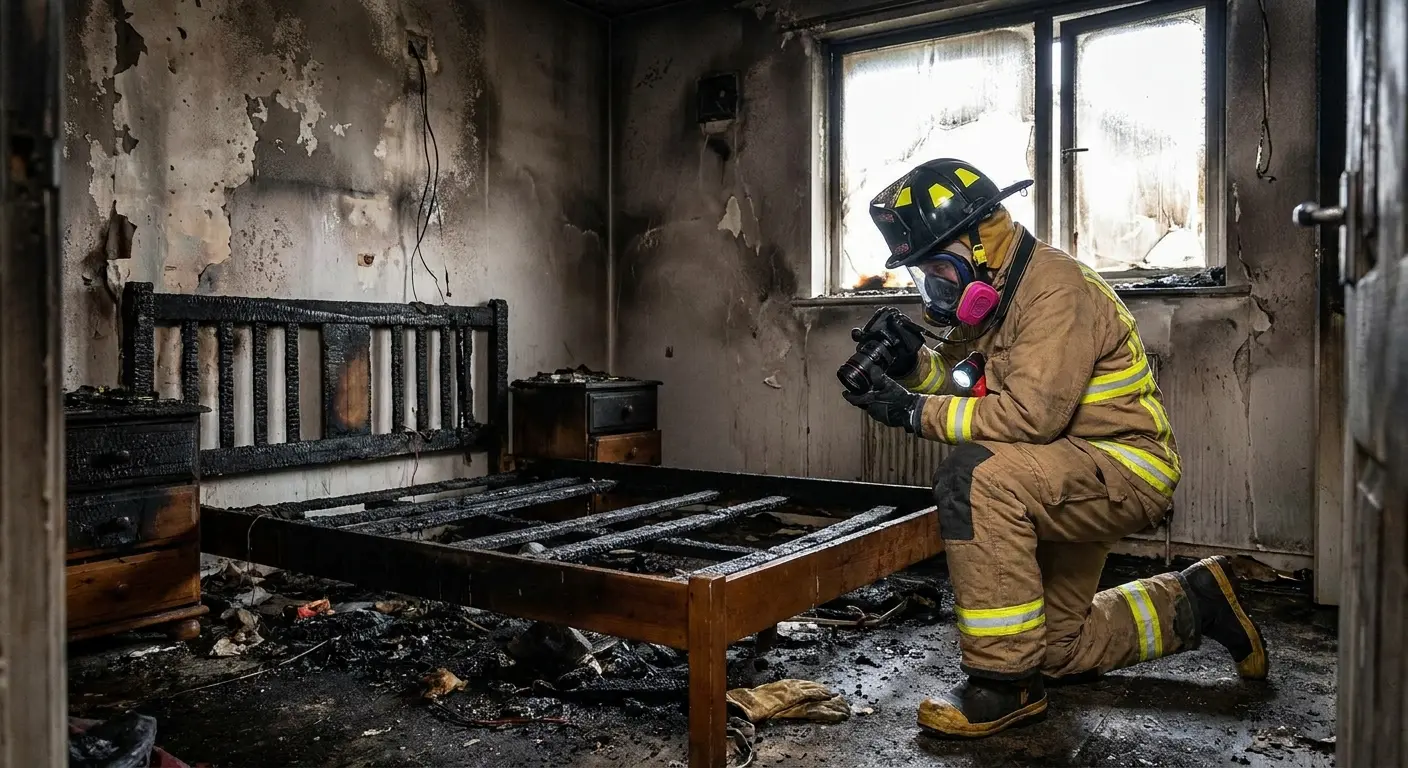
Fire load is the total quantity of combustible material within a space, expressed as the heat energy it can release when burned. It determines how hot a fire can get and how long it can sustain itself before running out of fuel. NFPA 921 addresses this concept under the closely related term "fuel load," which it defines as the total quantity of combustible contents in a building, space, or fire area, expressed in heat units or the equivalent weight in wood.
That definition matters because it already ties fuel quantity to heat energy rather than mass alone. Investigators should treat "fire load" and "fuel load" as terms that are frequently used interchangeably in practice, even though some engineering references draw a sharper technical distinction between them (covered in the next section).
A room's fire load depends on everything combustible inside it: furniture, wall and floor coverings, stored materials, and in some cases the structure itself. Two rooms of identical size can carry very different fire loads depending on their contents and use. A sparsely furnished office and a storage room packed with cardboard and plastic bins will not behave the same way in a fire, even with identical square footage and construction.
Fire investigators use fire load as one of several variables, alongside ventilation and compartment geometry, when evaluating whether observed fire damage is consistent with the fuel that was actually present.
Some fire protection engineering references distinguish fuel load, the mass or volume of combustible materials present, from fire load, the potential heat energy those materials can release once burned. Under that distinction, two rooms could contain the same mass of combustibles but carry very different fire loads if the materials have different heat-release characteristics.
In practice, however, investigators should not treat this as a settled, universal distinction. NFPA 921's own definition of fuel load is already expressed in heat units, which blurs the line some engineering texts draw between the two terms. Reports and testimony should state clearly which definition is being used and cite the source, rather than assuming the reader shares the same convention.
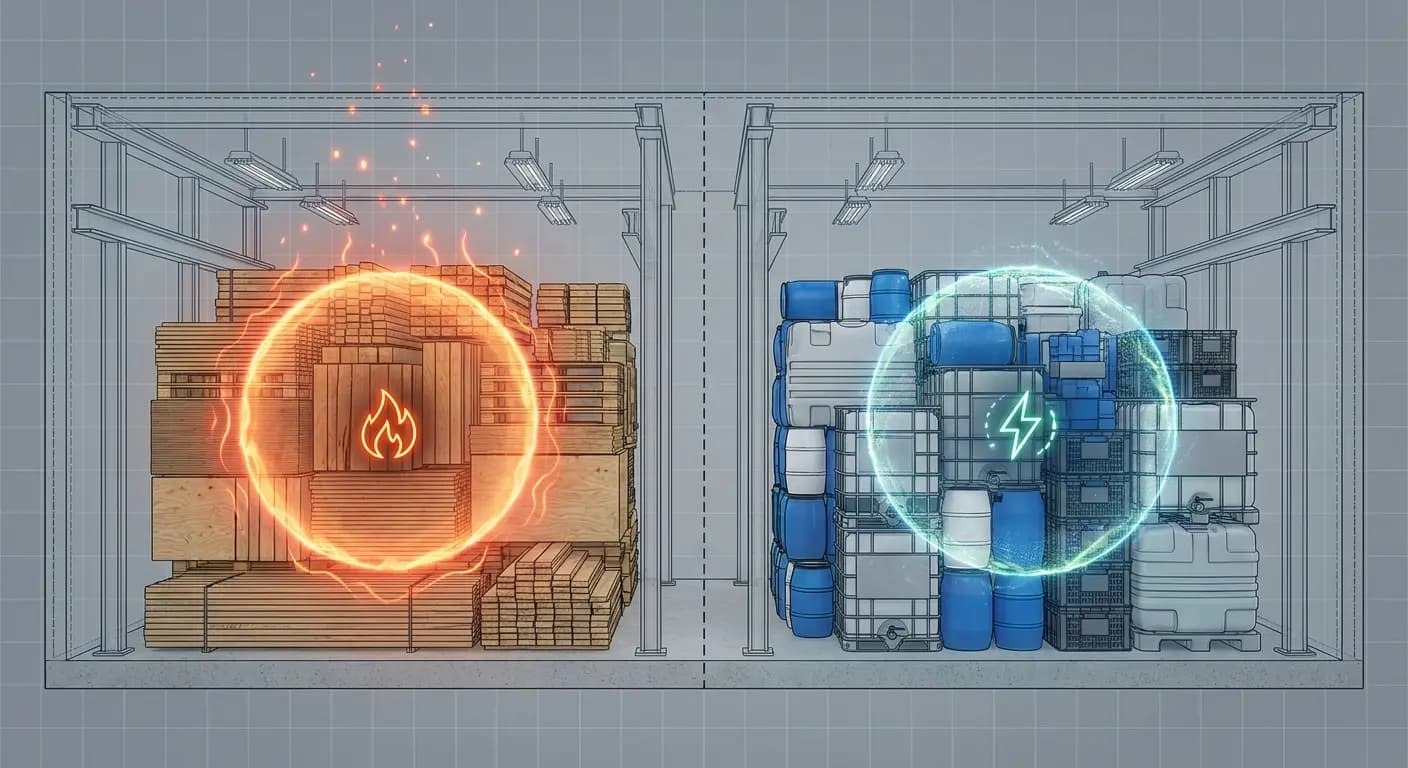
What is well established across sources is the underlying principle: not all combustible materials release the same amount of heat energy per unit of mass. Petroleum-based synthetic materials, such as many plastics and foams, generally release substantially more heat energy per unit mass than natural materials like wood, paper, or cotton. This is why two spaces with a similar quantity of combustible contents by weight can produce very different fire severity, and why investigators should not equate "a lot of stuff" with "a lot of fire load" without considering material type.
Investigators who need precise heat-of-combustion values for specific materials should consult a current edition of the SFPE Handbook of Fire Protection Engineering, NIST material property data, or manufacturer safety data sheets, and should document the source used. Generic figures repeated without a citation are not defensible in a contested case.
Fire load calculation follows a systematic process built around identifying combustible materials, quantifying them, and applying an appropriate heat-of-combustion value.
The general process:
- Identify and catalog all combustible materials in the defined space.
- Determine the quantity, by mass or volume, of each material type.
- Apply an appropriate heat-of-combustion value for each material, sourced from a verified reference.
- Multiply quantity by heat-of-combustion value for each material category.
- Sum the results to calculate total available energy.
- Divide total energy by the floor area of the space to normalize the result.
This methodology depends entirely on the quality of the source data used for heat-of-combustion values. Investigators should document exactly which reference table or standard they used for each material, since that documentation is what allows the calculation to be checked and defended later, including in litigation.
Post-fire fire load calculation is inherently limited by what survived the fire. Investigators are typically working with partial evidence: destroyed contents, incomplete pre-fire documentation, and witness recollection that may be imprecise. Commercial occupancies often maintain inventory or insurance records that help reconstruct pre-fire contents more precisely. Residential investigations more often rely on inference from room function, surviving material residue, and documented pre-fire photographs when available.
When materials cannot be identified with confidence, investigators should document ranges and the reasoning behind them rather than presenting false precision. A defensible report states its assumptions explicitly: for example, that wood furniture mass was estimated within a stated range based on surviving evidence and typical furnishing patterns for the occupancy type, with the basis for that estimate cited.
Occupancy and Use
Building occupancy type shapes baseline fire load expectations. Commercial and industrial occupancies that store or process combustible materials generally carry higher fire loads than typical residential or light office spaces. Fire protection engineering literature and building codes use occupancy-based fire load benchmarks for design purposes, but investigators should treat published benchmark ranges as reference points requiring verification against a current, cited source rather than fixed values, since these figures vary between references and jurisdictions.
Contents and Storage Density
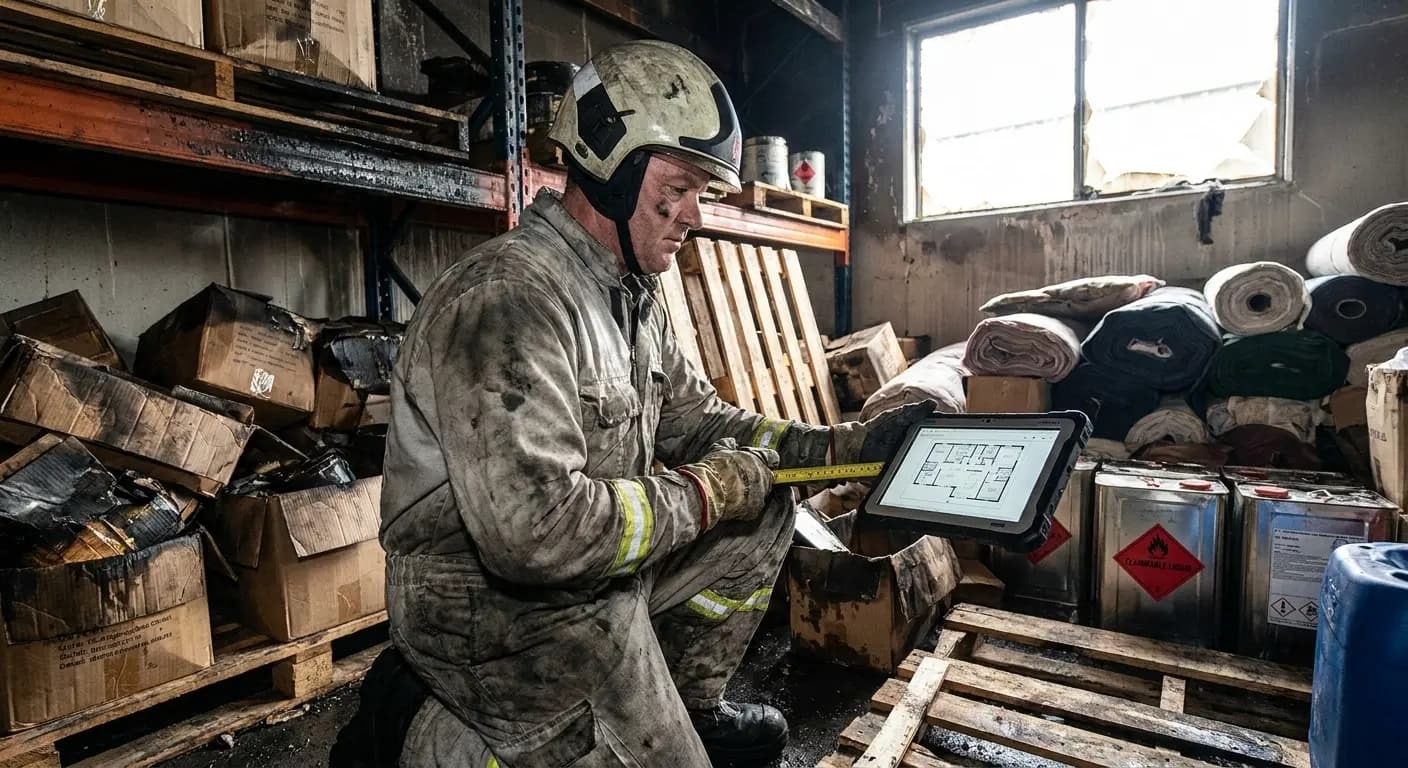
How occupants actually use a space has a direct effect on fire load, independent of occupancy classification on paper. A minimally furnished space carries a lower fire load than the same space filled with stored belongings, inventory, or accumulated materials. Storage practices in commercial spaces, high-piled stock in warehouses, or seasonal inventory increases in retail settings, create fire load variation that a floor-plan-based estimate alone will not capture.
Construction Materials and Interior Finishes
Structural elements and interior finishes contribute to fire load when they are combustible. Wood-framed construction, wood paneling, carpet and padding, and other combustible finishes add to the total fuel package and are frequently underestimated by investigators who focus only on room contents. Modern engineered wood products, including I-joists and oriented strand board, may carry different combustion characteristics than traditional dimensional lumber due to adhesives and manufacturing processes, and this should be accounted for rather than assumed away.
Temporal Variation
Fire load is not static. Investigators must establish fire load at the time of the incident, not current conditions or a historical average. Seasonal inventory cycles, renovation activity, and tenant turnover can all shift fire load meaningfully over time, and this should be considered when reconstructing pre-fire conditions.
Validating Fire Behavior and Severity
Fire load establishes a reasonable expectation for burn duration, temperature range, and damage extent given the fuel available. When observed damage significantly exceeds what the documented fire load could plausibly produce under a reasonable ventilation scenario, that discrepancy warrants further investigation, potentially including accelerant use, multiple points of origin, or other contributing factors.
Supporting Origin Determination
Fire load distribution within a structure informs the evaluation of potential origin locations, since areas with higher fire load concentrations tend to support more intense local burning. Investigators should cross-reference fire load considerations with burn pattern analysis rather than relying on either factor alone, and should treat an origin hypothesis pointing to an area with minimal fire load as one that requires additional supporting evidence.
Assessing Flashover Potential
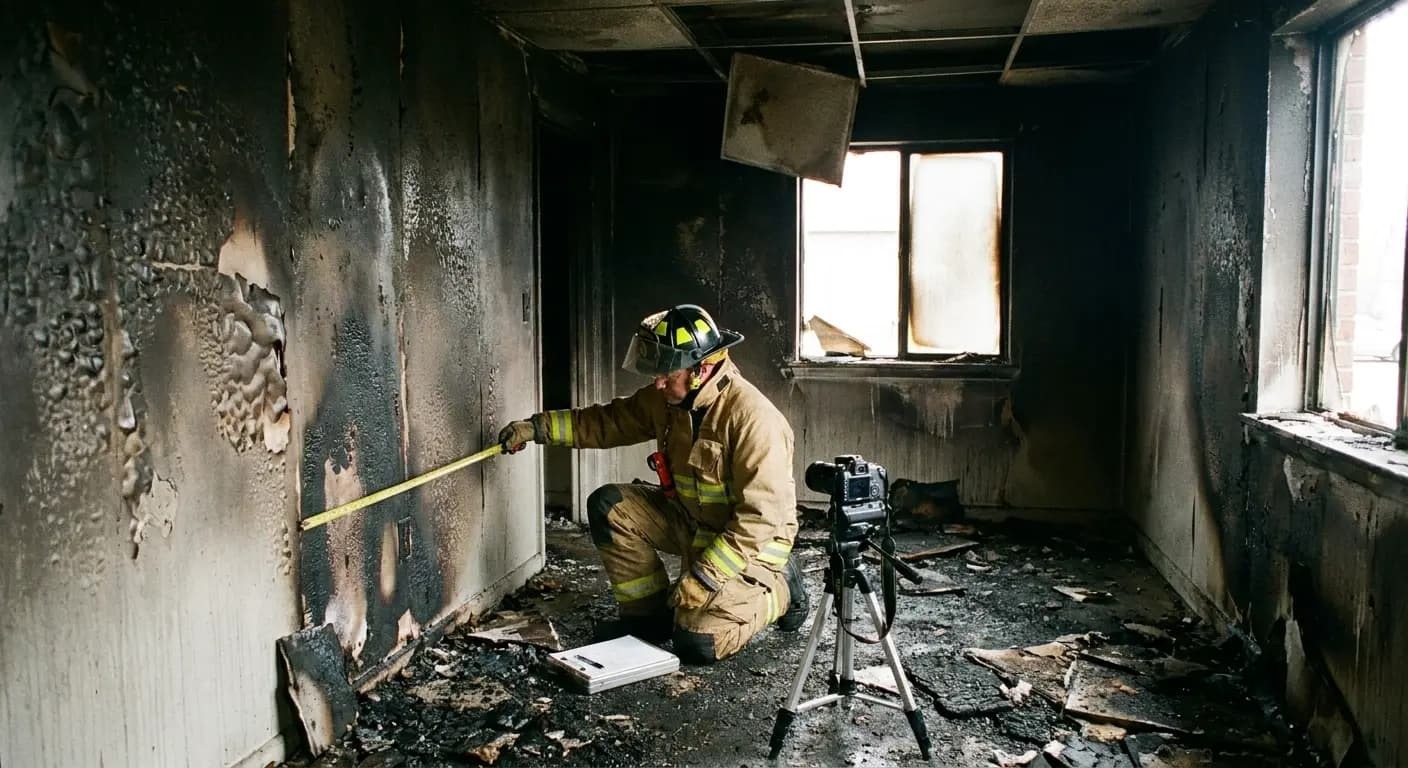
Fire load is one of the variables that determines whether a compartment fire can reach flashover conditions, alongside ventilation and compartment geometry. Flashover generally requires ceiling gas temperatures in the range of roughly 500 to 600 degrees Celsius, or a heat flux to the floor of approximately 15 to 20 kilowatts per square meter, figures commonly referenced in fire behavior training material tied to NFPA 921's definitions. A sparsely fueled compartment may not generate sufficient heat release to reach these conditions regardless of ignition source, which means claims of rapid flashover in a low fire load environment deserve scrutiny.
Expert Testimony and Documentation
Fire load calculations, properly sourced and documented, give investigators a quantifiable basis for testimony rather than a subjective impression of "a lot of fuel" or "minimal contents." Documenting the methodology and the sources used for each material's heat-of-combustion value is what allows a fire load conclusion to withstand challenge in litigation or peer review. An undocumented estimate carries far less weight than a calculation with a clear, citable basis.
Higher fire load generally extends potential burn duration and raises potential temperature ranges, though ventilation ultimately governs the temperatures a fire actually reaches. A fuel-rich but ventilation-limited fire may not achieve its theoretical maximum temperature despite a high fire load, while a well-ventilated fire in a high fire load environment can produce substantially more extensive damage.
Investigators evaluating burn patterns and pattern intensity should account for fire load variation across a structure before drawing conclusions from differences in char depth, pattern extent, or structural damage between areas. Uneven fire load distribution can produce pattern intensity differences that might otherwise be mistaken for evidence of multiple origins or accelerant use.
This is one reason fire load is best considered alongside, not separately from, the broader principles covered in fire dynamics, since fuel quantity and heat release rate together shape how a fire actually develops in a compartment.
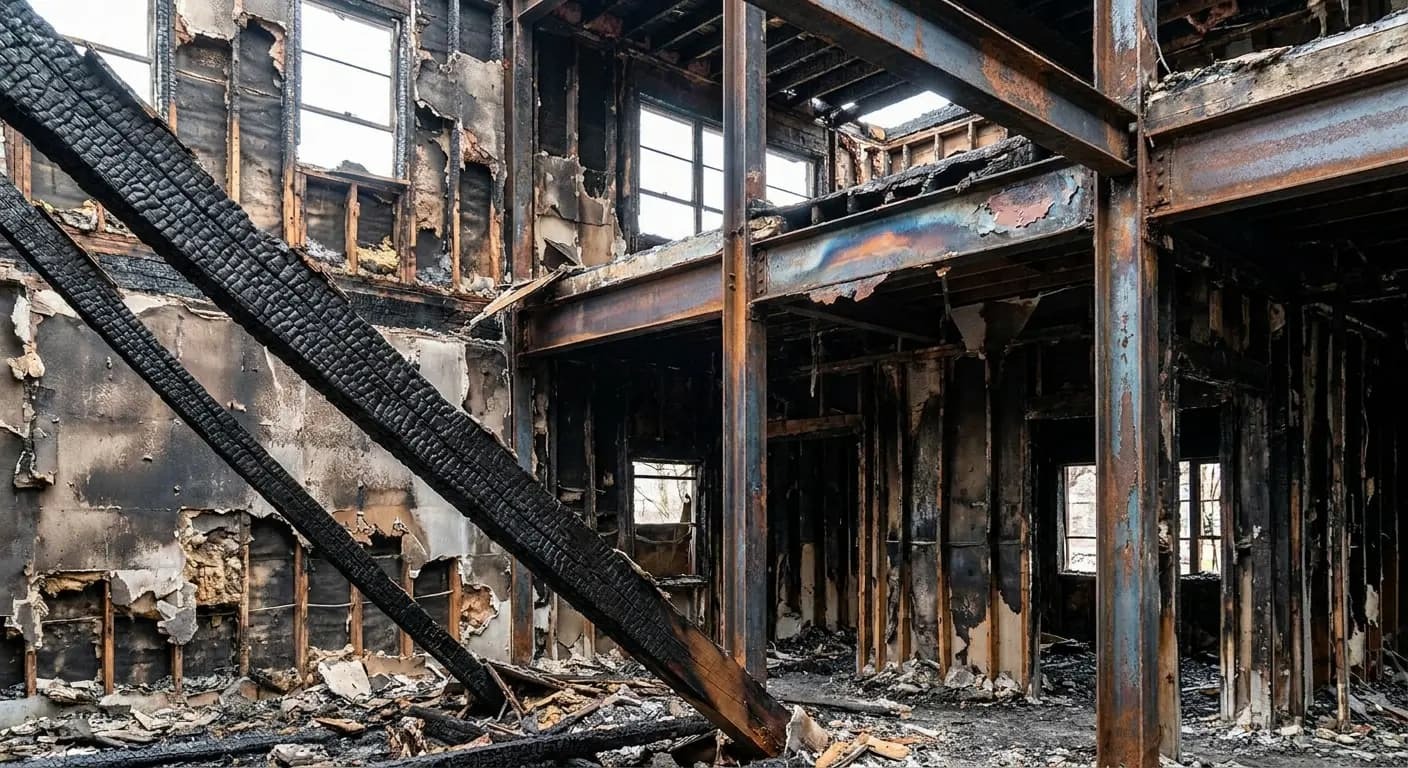
Fire load also has a direct bearing on structural damage assessment. Steel requires sustained high temperatures to deform, concrete needs prolonged heat exposure to spall, and heavy timber resists destruction longer than light wood framing. When structural damage in an area appears disproportionate to the documented fire load there, investigators should look for an explanation, whether that is ventilation effects, collapse dynamics, or a fuel source that was missed in the initial inventory.
Fire load density expresses fire load per unit of floor area, which is what allows fire risk to be compared across spaces of different sizes. In practice, fire load and fire load density are often the same measurement, since a fire load calculation already divides total energy by floor area; the "density" terminology simply emphasizes that the figure is normalized for space size.
Building codes and fire protection design standards use fire load density thresholds to inform decisions such as sprinkler requirements, fire resistance ratings, and compartmentation. As with occupancy-based fire load benchmarks discussed earlier, investigators should treat any specific density threshold cited in code or design literature as something to verify against the current, applicable code edition rather than a fixed universal number, since these figures vary by jurisdiction and are periodically revised.
Reconstructing Pre-Fire Conditions
Fire load calculations help establish what combustible materials were present before the fire, drawing on witness interviews, photographs, inventory records, and typical furnishing patterns for comparable occupancies. This reconstructed fire load functions as an energy budget: it constrains which fire behavior scenarios are physically plausible and helps rule out hypotheses that would require more available fuel than the documented contents could supply.
Supporting Fire Dynamics Modeling
Computational fire dynamics models require fire load as an input to predict fire growth, heat release rate, and compartment temperatures over time. Meaningful modeling depends on establishing a reasonably accurate fuel package and its energy content beforehand, which is why fire load documentation and fire dynamics analysis are closely linked disciplines rather than separate steps in an investigation.
Comparative Analysis and Timeline Validation
Fire load data allows investigators to compare a given incident against similar fires with comparable fuel and ventilation conditions, which helps identify whether observed damage is typical or unusual for that fire load. It also constrains plausible burn duration: when a witness-reported timeline is inconsistent with what the documented fire load could sustain, investigators need to reconcile that discrepancy, whether the explanation is a missed fuel source, a timeline error, or an external factor such as accelerant use or unusual ventilation.
Supporting the Origin and Cause Investigation Process
Fire load considerations fit within the broader origin and cause investigation methodology, where fuel distribution is one of several factors weighed alongside burn pattern analysis, witness statements, and physical evidence when developing and testing origin hypotheses.
Fire load documentation requires tracking material observations, quantities, measurements, and photographs while maintaining a clear chain of custody, all of which needs to flow into a defensible final report. Blazestack's evidence and media management tools keep this documentation organized in a single, cloud-based case file rather than scattered across notebooks, spreadsheets, and separate photo folders.
Material observations logged on-site can be attached directly to specific evidence items and photographs, with the resulting documentation already organized by the time a report is written. Because the platform works across devices, investigators can capture fire load data in the field and review or complete calculations back at the office, keeping the connection between material observations, spatial data, and supporting documentation intact throughout the case.
Can fire load change during a fire?
Fire load represents the total energy available at ignition, and it decreases as materials are consumed. The value investigators calculate for an investigation reflects pre-fire conditions, since that figure determines the maximum potential fire severity and expected burn duration, not the fuel remaining at any later point in the fire's development.
How does moisture content affect fire load calculations?
Moisture reduces the effective heat energy a material releases, because some of the available energy goes toward evaporating water rather than producing heat. Investigators should note whether materials showed evidence of significant moisture content at the time of the fire and adjust estimates accordingly, citing the reasoning in the report rather than applying a single generic value across all wood or cellulosic materials.
Do non-combustible contents factor into fire load calculations?
No. Fire load includes only materials capable of contributing fuel to the fire. Steel filing cabinets, concrete flooring, and similar non-combustible or limited-combustible materials are excluded from the calculation itself, though they still affect fire dynamics through heat absorption and compartment geometry.
How does fire load relate to heat release rate?
Fire load represents total available energy, while heat release rate measures how quickly that energy is released. Two spaces can have similar fire loads but very different heat release rates depending on material arrangement, exposed surface area, and ventilation. Both figures are needed for a complete fire behavior assessment; neither alone tells the full story.
What standards or references govern fire load calculation?
NFPA 921 addresses fuel load in its definitions section and treats it as a relevant variable in evaluating fire development, without prescribing a single required calculation methodology. Investigators should confirm the current edition of NFPA 921 and any jurisdiction-specific fire protection engineering standards that may apply, and should cite the specific reference and edition used for any heat-of-combustion or fire load density figures in a report, since these vary between sources and are updated periodically.
Why does material type matter more than total weight?
Because different combustible materials release very different amounts of heat energy per unit of mass. Two spaces with identical fuel weight can produce meaningfully different fire severity if one contains primarily natural materials like wood and cotton, and the other contains a higher proportion of synthetic materials such as certain plastics and foams. This is the core reason fire load, not fuel mass alone, is the more useful measurement for predicting fire behavior.
Final Thoughts
Fire load is not the most dramatic finding in a fire investigation, but it is foundational to several others. A documented, properly sourced fire load estimate gives investigators a basis for validating burn pattern analysis, evaluating witness timelines, and distinguishing expected fire behavior from anomalies that warrant deeper investigation.
The value of this work depends entirely on documentation and sourcing. A fire load figure without a cited basis is an opinion. A fire load figure with a clearly documented methodology and referenced source is evidence that can withstand challenge in litigation or peer review, which is the standard every fire load calculation should be built to meet.


Trusted by Public and Private Investigator Teams Everywhere
Whether you're a big state agency, a small local fire department or somewhere in between, Blazestack software (NFPA 921® & CJIS compliant) collects fire scene data and generates standardized origin and cause reports in a fraction of the time of other methods.
To learn more about Blazestack, give us a call at (866) 303-4344 or email us at support@blazestack.com
Get Your Free 14-Day Trial and Custom Price Quote Now
We'll let Blazestack do the talking. Try it out right now for free.
A member of our staff will be in touch shortly.