How Do Fire Investigators Identify the Area of Origin?

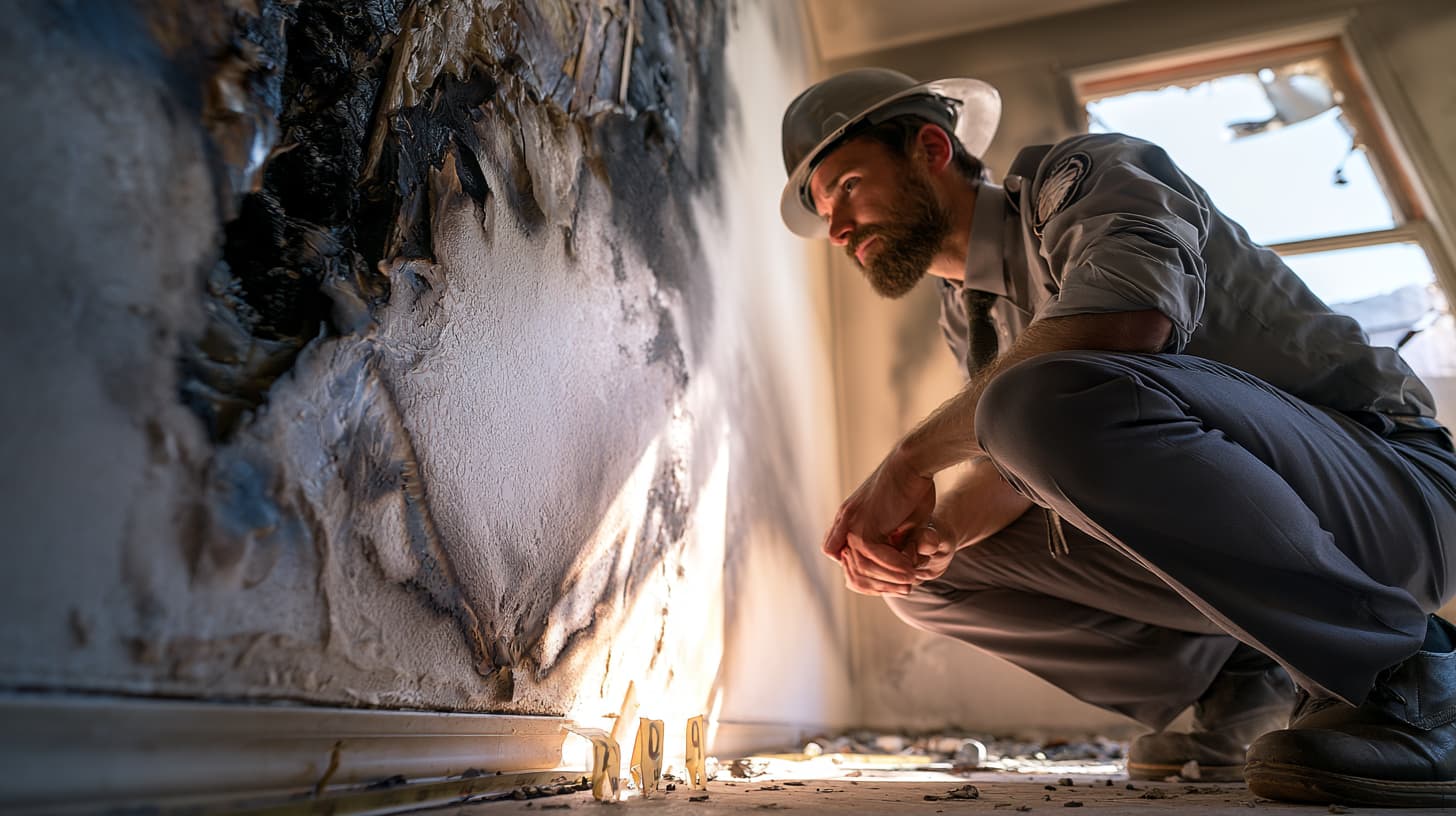
The area of origin is the general location where a fire started: the room, space, or zone within which the initial heat source and the first fuel ignited came into contact. Identifying this location is the first step in every origin and cause determination and provides the foundation for all subsequent analysis, from evidence collection to cause classification.
Area of origin identification narrows the investigative focus from an entire fire scene to a specific location. Without it, cause determination lacks a starting point. The methodology relies on systematic scene examination, fire pattern analysis, witness accounts, and an understanding of fire dynamics that allows investigators to read directional indicators and trace fire spread backward to its source.
The area of origin is defined as the general location or room where a fire started. It is within this area that the point of origin, the exact physical location where the heat source and fuel came into contact, can be found. The area of origin can be as large as a room or as small as a square inch, depending on the circumstances of the fire.
Identifying the area of origin is the first step in determining the cause of a fire. It provides the initial focus for the investigation and guides the subsequent steps, such as collecting evidence and interviewing witnesses. Without a clear understanding of the area of origin, it can be challenging to accurately determine the cause of the fire.
Point of Origin vs Area of Origin
While the terms "point of origin" and "area of origin" are often used interchangeably, they refer to different concepts in fire investigation. The point of origin is the exact physical location where the fire started, while the area of origin is the broader location containing the point of origin.
The point of origin is typically more challenging to identify than the area of origin, as it requires a more detailed examination of the fire scene. However, both are crucial for a comprehensive fire investigation and for determining the cause of the fire.
Identifying the area of origin is crucial in fire investigations for several reasons. Firstly, it narrows down the focus of the investigation. Instead of examining the entire fire scene, investigators can concentrate on a specific area, making the process more efficient.
Secondly, the area of origin often contains the most significant evidence related to the cause of the fire. This can include the heat source, the first material ignited, and any signs of accelerants or other factors that may have contributed to the fire's spread. By identifying the area of origin, investigators can ensure that this critical evidence is not overlooked.
Role in Determining Fire Cause
The area of origin plays a significant role in determining the cause of a fire. Once the area of origin has been identified, investigators can focus on finding the point of origin within that area. The point of origin often contains the evidence needed to determine the fire's cause, such as the heat source and the first material ignited. Identifying that heat source precisely (and meeting the NFPA 921 standard of a competent ignition source), is the subject of the next critical step in any investigation, covered in detail in the source of ignition guide.
Moreover, the area of origin can provide clues about the fire's spread, which can also help determine the cause. For example, if the area of origin is near a window, it might suggest that the fire was accelerated by outside air. On the other hand, if the area of origin is in a closed-off room, it might indicate that the fire was slow to spread.
There are several methods that fire investigators use to identify the area of origin. These methods involve examining the fire scene for specific signs and patterns that indicate where the fire started. Some of these methods include studying the burn patterns, looking at the fire's heat and smoke damage, and examining the direction of the fire's spread.
These methods require a deep understanding of fire behavior and the effects of fire on different materials. They also require a systematic approach to ensure that no part of the fire scene is overlooked. The specific method used can vary depending on the circumstances of the fire and the resources available to the investigators.
Studying Burn Patterns
Burn patterns are one of the most reliable indicators of the area of origin. These are the patterns left on surfaces by the fire, which can provide clues about the fire's direction and intensity. For example, a V-pattern on a wall often indicates the direction of the fire's upward and outward spread, pointing back toward the area of origin.
However, interpreting burn patterns can be complex, as they can be influenced by many factors, including the type of material burned, the presence of accelerants, and the actions taken to extinguish the fire. Therefore, burn patterns should be interpreted in conjunction with other evidence and not relied upon as the sole indicator of the area of origin.
Identifying the area of origin in a fire investigation can be challenging for several reasons. One of the main challenges is the destruction caused by the fire itself. The fire can consume crucial evidence and alter the fire scene, making it difficult to determine where the fire started.
Another challenge is the potential contamination of the fire scene. This can occur during firefighting efforts, during the fire's extinguishment, or even after the fire, during the investigation process. Contamination can distort the evidence and make it more difficult to identify the area of origin.
Overcoming the Challenges
Despite these challenges, there are strategies that fire investigators can use to accurately identify the area of origin. One strategy is to use a systematic approach to examine the fire scene. This involves starting from the least damaged areas and moving towards the most damaged areas, which are often close to the area of origin.
Another strategy is to use scientific methods and technology to analyze the evidence. This can include laboratory analysis of fire debris to identify accelerants, computer modeling to simulate the fire's spread, and advanced imaging techniques to visualize the fire scene. These tools can provide valuable information that can help overcome the challenges in identifying the area of origin.
The area of origin is a critical concept in fire investigation. It refers to the general location where a fire started, and it plays a crucial role in determining the cause of the fire. Identifying the area of origin requires a deep understanding of fire behavior, a systematic approach to examining the fire scene, and the ability to interpret complex evidence.
While there are challenges in identifying the area of origin, these can be overcome with the right strategies and tools. By accurately identifying the area of origin, fire investigators can provide valuable insights into the cause of the fire, contributing to justice, safety, and fire prevention efforts.
What Do Investigators Need to Know About the Area of Origin?
What is a fire's area of origin?
The area of origin is the general location where a fire started. NFPA 921 defines it as the room, structure, or area where the fire began. It contains the point of origin, which is the exact physical spot where the heat source and first fuel met. The area of origin can range from a specific zone within a single room to an entire room or, in large-scale fires, a broader geographic area. Identifying it is the first step in every fire investigation because it establishes where investigators concentrate their examination, evidence collection, and cause analysis. Without a confirmed area of origin, cause determination lacks a defensible foundation.
What does the area of origin tell investigators?
The area of origin tells investigators where to focus their examination for cause determination. It contains the physical evidence most relevant to ignition: the heat source, the first material ignited, and any factors that brought them together. Fire patterns within the area of origin reveal how the fire started and initially spread. The area also establishes context for cause analysis: an area of origin near an electrical panel suggests different hypotheses than one centred on a cooking surface or an exterior wall. By narrowing the investigation to a defined location, the area of origin makes systematic hypothesis testing possible and prevents investigators from drawing conclusions based on evidence found far from where the fire actually began.
Where does the search for the area of origin start at a structure fire?
The search starts at the areas of least damage and works inward toward the areas of greatest damage. Investigators begin at the fire's perimeter, where damage is minimal, and follow burn patterns and directional indicators toward increasingly damaged areas. This approach prevents investigators from starting in heavily damaged zones where evidence is most degraded and conclusions are hardest to support. Exterior examination often comes first: char patterns on the outside of the structure, witness accounts of where flames or smoke first appeared, and fire department records of conditions on arrival all help narrow the starting direction. Interior examination then follows the same principle, moving from rooms with less damage toward rooms with more damage until the area of origin is identified.
What is the difference between point of origin and area of origin?
The area of origin is the general location (a room, a section of a room, or a geographic zone) where the fire started. The point of origin is the exact physical spot within that area where the heat source and first fuel came into contact. The area of origin is identified first and narrows the investigative focus. The point of origin is identified second through detailed examination within the confirmed area of origin. In some investigations, the area of origin can be determined with confidence but the point of origin cannot, because fire damage, suppression activity, or structural collapse destroyed the specific evidence needed for that level of precision. Both determinations are documented separately in the origin and cause report, and investigators state the level of certainty associated with each.
What will the area of origin usually contain?
The area of origin usually contains the most severely damaged materials at the lowest point of burning, the remains of the first fuel ignited, and evidence of the heat source responsible for ignition. It typically shows the deepest char, the most complete combustion of materials, and fire patterns that radiate outward from a central point or zone. Depending on the fire, it may also contain physical evidence such as electrical components, appliance remains, accelerant residue, or smoking materials. Protected areas (spaces shielded from direct flame by furniture, walls, or structural elements) within or near the area of origin provide contrast that helps investigators confirm the location. The area of origin may also contain negative evidence: the absence of expected items or conditions that helps rule out certain causes.


Trusted by Public and Private Investigator Teams Everywhere
Whether you're a big state agency, a small local fire department or somewhere in between, Blazestack software (NFPA 921® & CJIS compliant) collects fire scene data and generates standardized origin and cause reports in a fraction of the time of other methods.
To learn more about Blazestack, give us a call at (866) 303-4344 or email us at support@blazestack.com
Get Your Free 14-Day Trial and Custom Price Quote Now
We'll let Blazestack do the talking. Try it out right now for free.
A member of our staff will be in touch shortly.