Fully Involved Fire: How Investigators Approach Evidence, Timeline, and Documentation

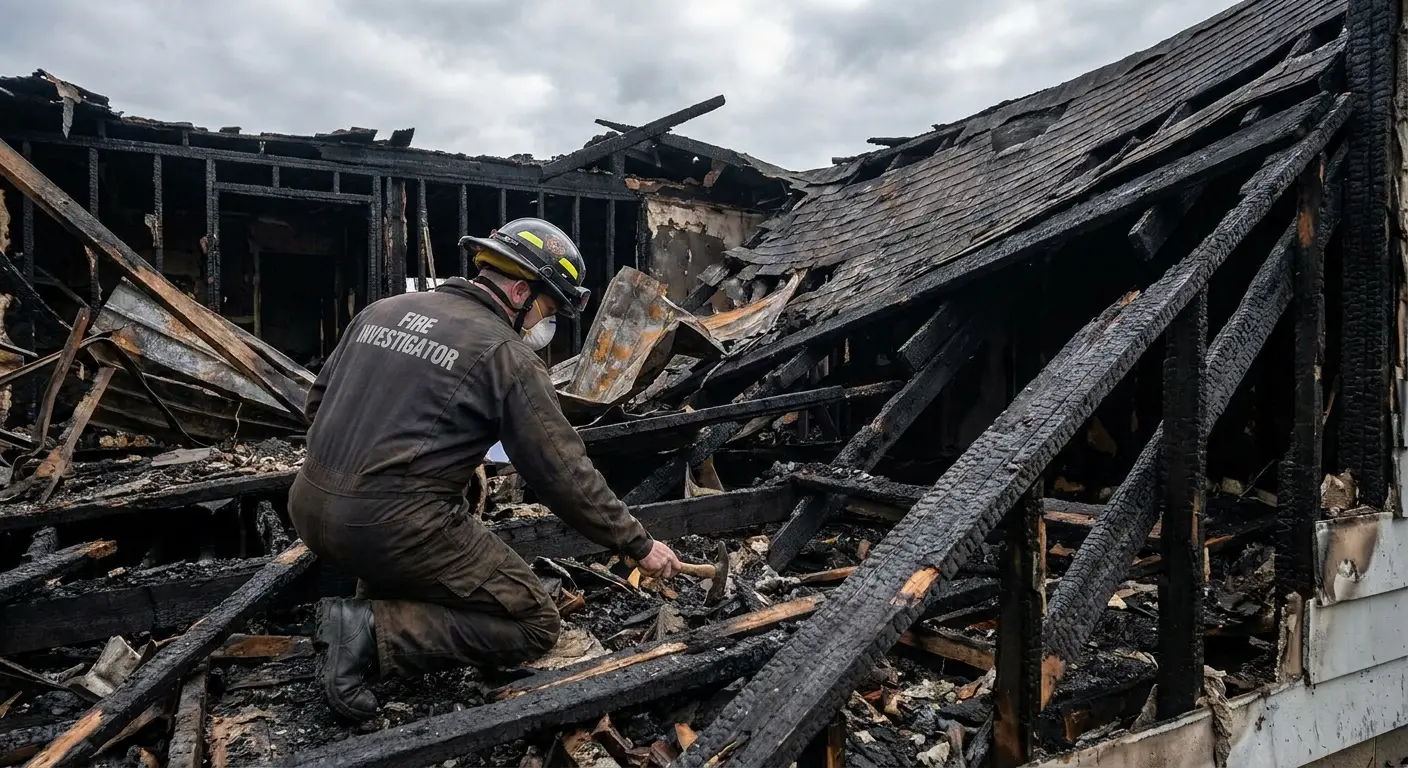
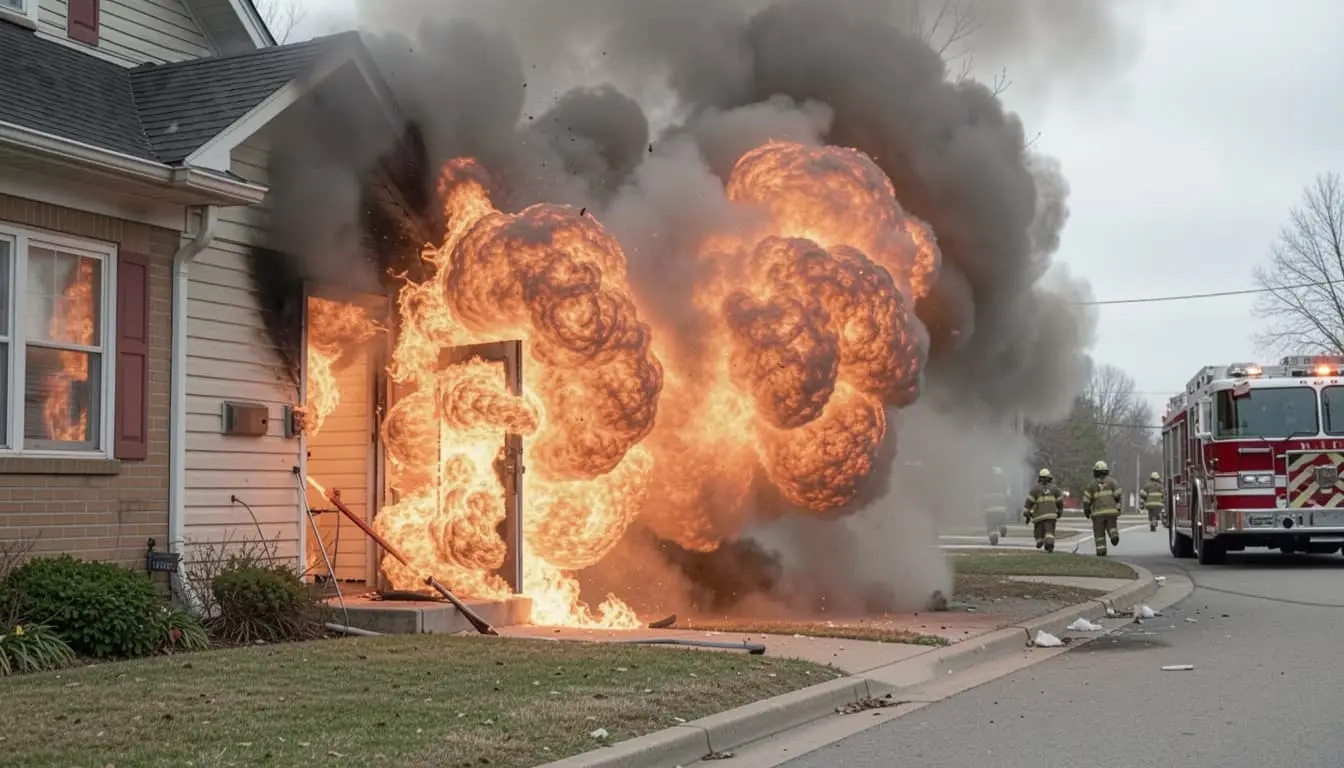
Fully involved describes a fire condition where flames have extended throughout all portions of a structure. This is not a casual description of how bad the fire looked, it is a formal characterisation of scene conditions that carries specific investigative implications and must be defensible in a report and in testimony.
NFPA 921 addresses arrival conditions and scene documentation but does not prescribe a single methodology for fully involved fire scenes. What it does require is that investigators document what was observed on arrival and explain their methodology when traditional physical evidence is limited or absent. The distinction matters because it affects every subsequent investigative decision.
Why This Condition Changes Everything
Standard burn pattern analysis is unreliable at fully involved fire scenes. Every surface has experienced prolonged exposure to heat and flame. Char depth may reflect ventilation-induced fire spread during suppression rather than initial fire development. Directional indicators have been subjected to conditions far beyond what standard interpretation guidelines assume.
Understanding burn patterns in fire investigation remains important, but at a fully involved scene these patterns must be interpreted with extreme caution and corroborated with non-scene evidence before they can support any defensible conclusions. Investigators who attempt to identify origin based solely on char depth or low burning patterns at a fully involved scene risk selecting an origin based on suppression-altered damage rather than initial fire development — a conclusion that opposing experts will challenge effectively.
The fully involved condition on arrival should immediately signal a shift in investigative approach: from relying on physical patterns to building a case through witness accounts, pre-fire documentation, and suppression crew observations.
Extended burning duration creates patterns that can mislead investigators into identifying false origins or misinterpreting fire spread. When a structure reaches full involvement, every compartment has been exposed to sustained heat and flame. The patterns observed reflect that extended exposure, ventilation changes during suppression, and water application — not necessarily the fire's initial development.
Ventilation operations during suppression create secondary burn patterns that overlay original fire movement. A roof cut creates a new flow path. Positive pressure ventilation alters how heat and smoke move through the structure. These activities happen before the investigator arrives and cannot be undone.
What Survives and What It Can Actually Tell You
Despite extensive damage, certain evidence types persist in fully involved fires and retain investigative value. Electrical system components, appliance remains, HVAC system evidence, and structural elements may still indicate pre-fire conditions or alterations. The critical distinction is between identifying what is present and making causal determinations based on that presence. Finding a damaged electrical outlet in an area of heavy fire damage does not establish that the outlet caused the fire — it establishes that an outlet was present when the fire occurred.
Suppression activities cause more scene alteration at fully involved fires than at any other condition. Crews cut ventilation holes, breach walls for access, apply thousands of gallons of water, and move debris during overhaul, all before the investigator arrives.
Detailed accounts of suppression activities are essential to distinguish fire damage from suppression damage. Which walls were opened? Where did ventilation occur? How was water applied? What materials were moved during overhaul? This documentation protects both the investigation and the suppression crews by establishing a clear record of post-ignition scene alterations.
Suppression crews must be interviewed while memories are fresh — ideally at the scene or immediately after the incident. Priority should be given to the first-arriving officer and whoever made the interior attack. Key information to capture includes:
- Ventilation operations: roof cuts, windows opened, PPV deployment
- Where water was applied first and in what volume
- Walls or ceilings opened during fire attack
- Materials moved during overhaul
- Personnel involved in each activity for follow-up
- Any unusual observations during suppression operations
These details explain why certain areas show more water damage, why debris is concentrated in specific locations, and provide the context necessary to interpret scene conditions accurately.
Why Dispatch Records Matter More Than Physical Evidence
Dispatch records provide time-stamped documentation of fire progression that becomes primary evidence when physical scene evidence is compromised. These records document what callers reported before suppression activities began altering conditions.
Complete dispatch records (not just CAD printouts or incident summaries) should be requested as early as possible. Dispatch centres maintain audio recordings, full caller statements, and detailed logs that provide information the abbreviated codes in computer systems do not capture. From these records, investigators can establish caller descriptions of smoke and flame location, reported sounds or explosions, timeline details that help establish fire duration, and multiple caller reports that show fire progression.
A sequence of three callers reporting "smoke coming from the back of the house" at 02:47, "flames in the windows on the side of the house" at 02:51, and "the whole house is on fire" at 02:54 creates four time-stamped observations across seven minutes. Fire progression from initial smoke visibility to full involvement over that period suggests either multiple ignition points, a fire involving highly combustible materials, or significant available fuel load. This timeline information becomes primary evidence when the structure can no longer reveal fire progression patterns.
First Responder Accounts: Getting Useful Information While It's Available
First arriving units observe conditions that no subsequent investigation can recover. Where was the fire showing on arrival? What did they hear or smell? What conditions did they encounter during interior operations? This information exists for a limited time before crews return to service, go off shift, or lose specificity in recall.
Structuring witness interviews to gather specific observations rather than general impressions is essential with first responders. Key information to obtain includes:
- Conditions on arrival: smoke colour, volume, and location
- Where fire was visible on approach: specific windows, doors, roof areas
- Any sounds heard: breaking glass, structural failure, explosions
- Any unusual odours: petroleum products, plastics, chemicals
- Interior conditions at the point of entry
- Anything that distinguished this fire from a typical response
Scene Assessment When Everything Looks Equally Destroyed
Initial scene assessment at fully involved fires requires different priorities than typical investigations. The focus is not on identifying an obvious area of origin; extensive damage means every room shows similar conditions. Instead, the assessment should focus on overall damage patterns, structural stability, suppression evidence, and areas requiring immediate preservation.
Traditional indicators including heat shadowing, protected areas, and directional patterns may be absent or unreliable. When every surface has experienced prolonged exposure and ventilation has altered fire movement, these indicators cannot be used to identify origin without non-scene corroboration.
Areas showing significantly different damage from surrounding spaces warrant documentation and attention. Which portions of the structure collapsed? Where did suppression crews concentrate efforts? Are there exterior areas that may have been less affected? These observations guide subsequent examination priorities.
Identifying What Needs Immediate Documentation
Certain conditions and evidence degrade rapidly or disappear entirely if not captured immediately. Witness availability is the most time-sensitive. Neighbours, passersby, and occupants who observed conditions before or during fire development will not remain on scene indefinitely.
Transient physical conditions also require immediate capture. Weather affects the scene continuously; rain washes away ash patterns, wind moves debris, temperature changes alter material properties. Photographic and video documentation of initial conditions must occur before these factors further compromise what remains.
Communication with other agencies about preservation needs is equally important. Building officials, property owners, and insurance representatives all have legitimate reasons to access the scene, but access must be coordinated to prevent the destruction of evidence that has not yet been documented.
Coordinating with Other Agencies
Fully involved fires draw multiple agencies with concurrent access needs. Establishing clear communication about evidence preservation: which areas must remain undisturbed, what activities can proceed without compromising the investigation, who must be notified before accessing specific areas, protects the investigation and all parties involved.
Documenting who accessed the scene and what activities they performed creates a record of post-fire scene alterations. If evidence is subsequently moved or destroyed, this documentation establishes when and why it occurred.
When the structure cannot reveal pre-fire conditions, external documentation becomes the baseline. Tax assessor records, previous inspection reports, insurance photographs, real estate listings, and social media posts can show interior conditions, room configurations, and contents before the fire. Real estate listings in particular often include detailed interior photographs that provide room-by-room documentation of conditions from recent months.
Social media provides additional unexpected documentation. Photographs posted by occupants showing electrical modifications, furniture placement, appliance locations, or storage conditions may become directly relevant to the investigation, and may support or contradict occupant accounts of conditions at the time of the fire.
Utility records establish occupancy patterns and energy usage that provide context for potential ignition sources. Elevated electrical consumption may indicate space heater use or electrical issues. Gas usage patterns show heating system operation and can help establish when systems were active.
Fire Timeline Development from External Sources
When the scene cannot reveal fire progression, timeline reconstruction from external indicators becomes the investigative foundation. Applying the scientific method of fire investigation to external evidence sources ensures the reconstruction can withstand legal scrutiny.
Correlate witness observations, video footage, dispatch records, and first responder accounts to establish when the fire started, how it progressed, and what conditions existed at key points. Document timeline gaps and reconcile conflicting information explicitly — explaining which sources were relied upon, why certain accounts were weighted more heavily, and how conflicts were resolved demonstrates analytical rigour rather than selective use of evidence.
Rapid progression from initial smoke visibility to full involvement in a compressed timeframe tells investigators something about fire development. Was the available fuel load consistent with that progression? Were there ventilation factors that accelerated spread? Did building construction contribute to rapid fire extension? These questions drive hypothesis development even when physical patterns cannot.
What NFPA 921 Requires — and What It Does Not
NFPA 921 requires investigators to document arrival conditions and explain their methodology when standard pattern analysis cannot be applied. It does not require that investigators reach a definitive origin and cause determination in every case.
When evidence does not support a specific conclusion with reasonable certainty, documenting that limitation honestly is both professionally appropriate and legally protective. Investigators should explain what evidence was compromised, what analyses were attempted, and why available information does not support a specific determination. An honestly documented undetermined finding is significantly more defensible than an origin determination that cannot be supported under cross-examination.
Documenting the investigative process thoroughly, such as which areas were examined, which tests were performed, which witnesses were interviewed, which external documentation was reviewed, demonstrates that a thorough investigation was conducted even when definitive conclusions cannot be reached.
Conclusions about what can be determined retain value even when full origin and cause determination is not possible. Eliminating certain areas or ruling out incendiary causes has investigative significance even when the precise ignition source cannot be established.
Structured Data Collection from the Moment of Dispatch
Systematic documentation must begin at dispatch, not on arrival. Recording the time of notification, who called, and initial report details establishes the beginning of the investigative timeline. Documentation templates and checklists that prompt capture of critical information at each phase (dispatch, en route, arrival, initial assessment), ensure consistency when the scene environment is chaotic.
What to capture at each phase: During dispatch: time, caller, initial report details. En route: weather conditions, time of arrival observations. On arrival: scene conditions, agencies present, immediate observations. During initial assessment: structural stability, suppression activities, witness availability and locations.
Photograph and Video Documentation When Patterns Are Unreliable
Photographic documentation at fully involved scenes serves different purposes than at typical fire scenes. The goal is not capturing clear burn patterns pointing to origin — it is documenting overall conditions, suppression damage, remaining evidence, and spatial context.
Wide shots establish overall scene conditions. Medium shots show relationships between areas and features. Close-up shots document specific items or conditions. This progression provides context that supports later analysis and demonstrates the scene conditions at the time of the investigation.
Photo logs documenting each image's location, direction, and subject are essential when reviewing hundreds of photographs weeks after the scene. Video documentation of the initial walkthrough, with narration of observations, creates a record of initial impressions before detailed examination alters the investigator's perspective on the scene.
Building Defensible Case Files When Physical Evidence Is Limited
Fire investigation reports for fully involved scenes must rely more heavily on witness statements, external documentation, and investigative reasoning than reports for less compromised scenes. The file must demonstrate process, support conclusions, and acknowledge evidence limitations explicitly.
Negative findings belong in the documentation, what could not be observed or determined, and why certain analyses were not possible, demonstrates thoroughness rather than inadequacy. Explaining that the electrical system was examined but a specific failure could not be identified due to the extent of damage is a legitimate finding that protects the determination from challenge.
Case file organisation should allow a reviewer to follow the investigative process from initial notification through final conclusions: initial scene conditions and suppression activities, witness statements and first responder accounts, external documentation gathered, analysis and reasoning, and conclusions with appropriate qualifications. Acknowledging what cannot be determined strengthens credibility regarding what can be — reviewers are more likely to trust specific conclusions when evidence limitations are honestly presented.
Closing the Documentation Gap with Purpose-Built Tools
Fully involved fire investigations generate critical information in a compressed timeframe — suppression crew accounts, witness observations, dispatch records, initial scene conditions — that must be captured accurately before it degrades or disappears. Managing this information systematically from the moment of dispatch determines whether the case file ultimately supports defensible conclusions.
Blazestack's Fire Scene Data Collection module supports this workflow through structured mobile data capture that begins at dispatch and continues through scene examination. Suppression activities, witness accounts, dispatch record details, and initial scene conditions can be logged in real time rather than reconstructed from memory and handwritten notes. Photographs associate automatically with structured field data, maintaining organisational integrity across hundreds of images captured under difficult conditions. Scene data flows directly into NFPA 921-compliant origin and cause reports without manual reformatting.
Investigators can test the platform with a 14-day free trial or schedule a demo to see how the documentation workflow handles compromised scenes from dispatch through final report.
Final Thoughts
Fully involved fires test investigators precisely because the tools most relied upon (burn patterns, char depth, directional indicators), have been compromised by the very conditions that define the scene. Recognising this limitation early and shifting investigative priorities accordingly is what separates cases that produce defensible conclusions from those that don't.
The most valuable evidence at a fully involved fire is often the evidence that exists before the investigator arrives: dispatch records, witness observations, first responder accounts, and pre-fire documentation. Capturing this evidence in the first 30 minutes, before witnesses disperse and memories fade, is the most consequential decision an investigator makes at these scenes.
Honest documentation of what the evidence can and cannot support (including an undetermined finding when the evidence warrants it) produces case files that withstand scrutiny. Forcing conclusions that the evidence does not support produces determinations that opposing experts will dismantle. The investigative process itself, thoroughly documented, is what holds up.


Trusted by Public and Private Investigator Teams Everywhere
Whether you're a big state agency, a small local fire department or somewhere in between, Blazestack software (NFPA 921® & CJIS compliant) collects fire scene data and generates standardized origin and cause reports in a fraction of the time of other methods.
To learn more about Blazestack, give us a call at (866) 303-4344 or email us at support@blazestack.com
Get Your Free 14-Day Trial and Custom Price Quote Now
We'll let Blazestack do the talking. Try it out right now for free.
A member of our staff will be in touch shortly.