Arson Investigator Salary: Pay Ranges, Career Stages & What Drives Earnings

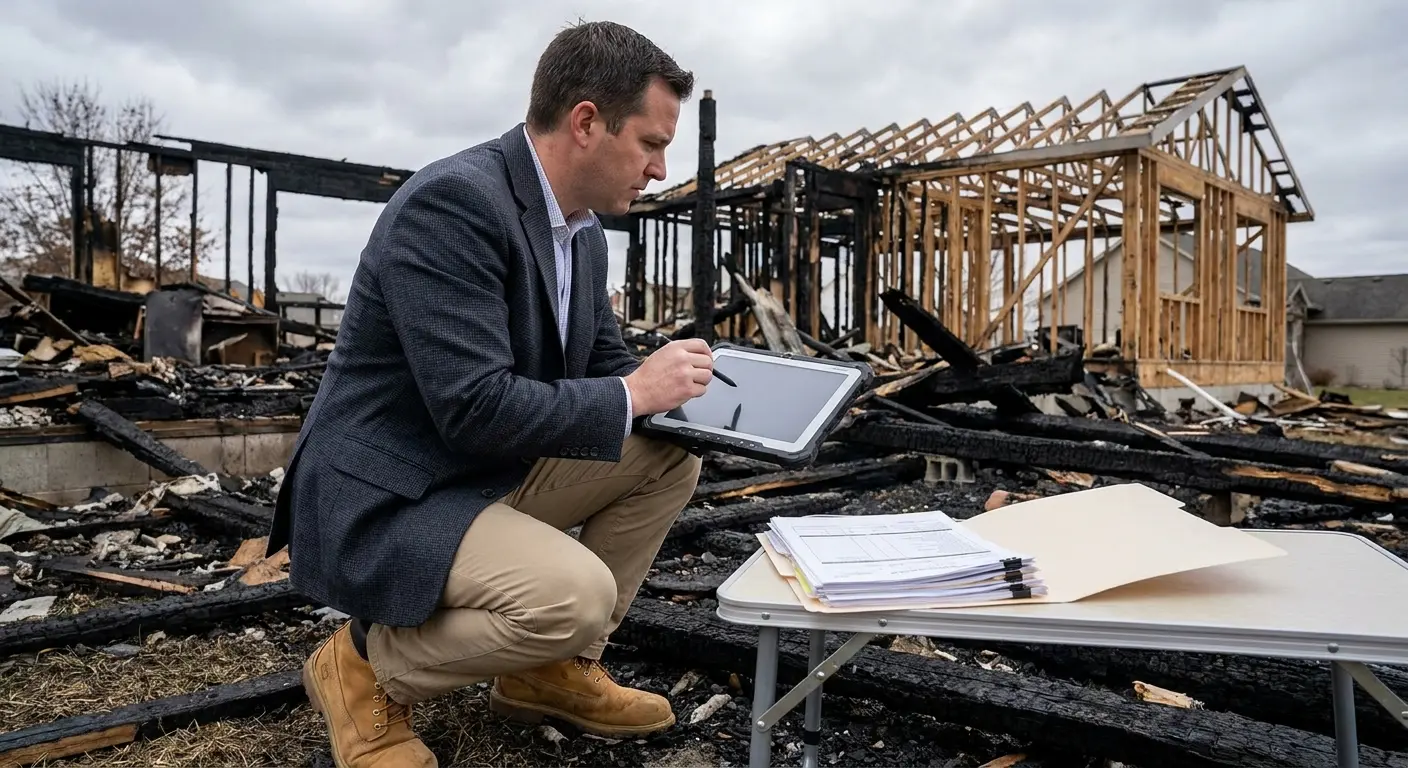
Arson investigators earn 12–18% more than general fire investigators at comparable experience levels. The median arson investigator salary in 2026 is $68,500, compared to $61,200 for general fire investigators.
The premium reflects a genuine difference in role scope. Fire investigators determine origin and cause. Arson investigators focus on the criminal component: building prosecutable cases, coordinating with law enforcement, and delivering testimony in criminal trials. Every scene decision is made with prosecution standards in mind.
Arson investigation requires training beyond standard fire science credentials. Investigators must understand criminal law, chain of custody protocols for criminal proceedings, and courtroom procedure. Many arson investigators work directly within police departments, state fire marshal offices, or federal agencies such as the ATF and FBI.
The salary gap is smaller at entry level ($49,000 vs. $46,000) and widens significantly at senior levels ($110,000 vs. $85,000), reflecting the compounding value of criminal investigation expertise over time.
For a full breakdown of general fire investigator compensation, see the fire investigator salary guide.
Arson investigator salaries range from $49,200 to $116,400 nationally, with a median of $68,500. The data below reflects 2026 figures from the Bureau of Labor Statistics, ZipRecruiter, and professional association surveys.
Arson Investigator Salary Percentiles — United States (2026)
Overtime adds substantially to base figures. Fire scenes do not follow business hours. Investigators working active cases frequently log 10–20 hours of additional weekly hours. At time-and-a-half rates, that overtime can add $15,000–$25,000 to annual compensation. A base salary of $72,000 can realistically reach $95,000 or more during active investigation periods.
Total compensation also includes benefits. Public sector positions include defined-benefit pensions, employer-subsidized health insurance, and education reimbursement that add 25–40% to the value of base salary. These benefits are not reflected in headline salary figures.
Experience is the primary driver of arson investigator compensation. Salary progression is predictable across four stages.
Entry Level (Years 1–3): $49,000–$58,000
Entry-level investigators work under direct supervision. Scene work is closely reviewed. Independent casework is limited. Most investigators at this stage are learning criminal investigation procedures while applying fire science knowledge.
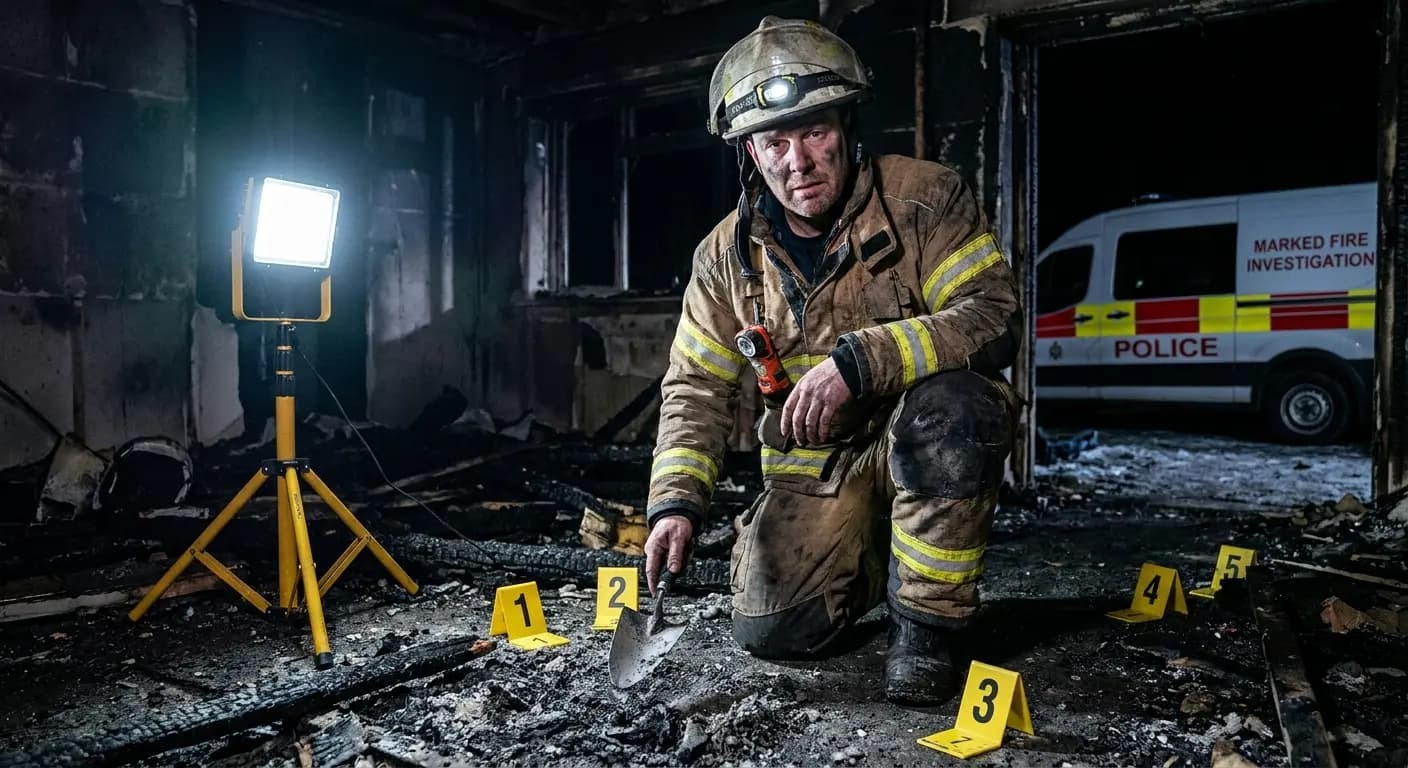
Entry-level backgrounds vary: firefighters transitioning to investigation, law enforcement officers specialising in arson, and recent fire science graduates. Each brings different strengths and different learning curves.
Certification pursuit begins immediately. IAAI-CFI eligibility requires 80+ hours of approved training and three years of full-time experience. Building that foundation during the entry phase determines mid-career trajectory.
Mid-Career Growth (Years 4–12): $62,000–$94,000
Mid-career is where the most significant salary growth occurs. Investigators handling cases independently, testifying regularly, and carrying primary IAAI-CFI or CFEI certification move from the $62,000–$76,000 range into $78,000–$94,000 as expertise deepens.
Specialisation decisions made during this phase determine long-term earning potential. General arson investigators at ten years experience earn $72,000–$88,000. Specialists in wildfire arson, insurance fraud, or explosives investigation earn $82,000–$105,000 at the same tenure.
Strategic lateral moves accelerate growth. Moving from a municipal department to a state fire marshal office can add $15,000–$25,000. Moving from state to federal agencies can add another $20,000–$35,000.
Senior Investigator (Years 15+): $95,000–$138,000
Senior investigators handle the most complex cases. They supervise units, develop training programmes, and consult on cases outside their jurisdiction. Expert witness work becomes a significant income source, with certified senior investigators charging $175–$350 per hour.
Federal senior investigators at GS-14 or GS-15 levels earn $130,000–$165,000 before locality pay adjustments.
Mid-Career Advancement Checklist: Breaking Through the $75,000 Ceiling
- ☐ IAAI-CFI or CFEI certification completed
- ☐ 100+ independent origin and cause determinations documented
- ☐ Specialised training completed in at least one niche area (electrical, vehicle, wildfire, or industrial)
- ☐ Expert witness testimony delivered in three or more legal proceedings
- ☐ Case closure rate at or above department average
- ☐ Presented or published at professional conferences
- ☐ Supervised or mentored junior investigators
- ☐ Demonstrated capacity for complex case management
Public and private sector positions offer different compensation structures, and the right choice depends on career stage, risk tolerance, and retirement planning.
Public Sector Compensation
Municipal fire department investigators earn $58,000–$78,000. Pay scales mirror firefighter ranks, with regular step increases and promotional pathways. Police department arson investigators earn slightly more: $62,000–$82,000, with sworn law enforcement status and overtime provisions.
State fire marshal investigators occupy the upper range: $68,000–$92,000. They handle complex multi-jurisdictional cases with access to better training budgets and laboratory resources.
Public sector benefits add 25–40% to total compensation value:
- Defined benefit pension (typically 2–3% of final salary per year of service)
- Employer-paid health insurance covering 75–90% of premiums
- 15–25 paid vacation days annually
- Education reimbursement of $3,000–$8,000 annually
- Overtime at time-and-a-half or double-time rates
- Life insurance and disability coverage
Private Sector Compensation
Insurance company investigators earn $65,000–$95,000 as full-time employees. Investigation firms pay $75,000–$110,000 for experienced investigators working on contract for insurance carriers or attorneys.
Consulting represents the highest private sector earning potential. Established consultants charge $150–$350 per hour. Successful consulting practices generate $120,000–$200,000+ annually. Building that practice requires 15+ years of investigation experience, strong professional credentials, and an established courtroom reputation.
Public vs. Private Sector Comparison
The pension calculus matters significantly for long-term planning. A defined benefit pension in a public sector position is typically worth $30,000+ annually in retirement. Private sector roles must offer meaningfully higher base salaries to compensate for that difference over a 25–30 year career.
Some investigators follow a hybrid path: building credentials and courtroom experience in the public sector, then transitioning to private consulting at senior level.
Federal positions offer the highest base salaries in arson investigation. ATF and FBI roles start well above state and local equivalents.
ATF Fire Investigators
ATF fire investigators enter at GS-11 or GS-12 levels: $87,000–$104,000 in base pay. Locality adjustments in major metropolitan areas push starting compensation to $95,000–$115,000. The role involves arsons with federal jurisdiction, including cases tied to explosives, organised crime, or terrorism.
FBI Special Agents (Arson Specialisation)
FBI agents with arson specialisation enter at GS-10: approximately $85,000. Advancement to GS-13 within 3–5 years moves earnings to $110,000–$130,000 before locality adjustments. Major metropolitan areas add 15–30% to base figures.
Federal Law Enforcement Availability Pay (LEAP) adds 25% to base salary for agents, replacing traditional overtime. Agents are expected to work 50-hour weeks as standard.
Federal Benefits Package
- FERS pension with employer contributions
- Thrift Savings Plan with 5% employer matching
- Federal Employees Health Benefits: comprehensive coverage at low premiums
- 26 paid vacation days after three years of service
- 13 paid sick days annually
- Federal law enforcement retirement at age 50 with 20 years of service
Federal hiring is highly competitive. Requirements typically include a bachelor's degree in fire science, criminal justice, chemistry, or engineering; prior law enforcement or fire investigation experience; extensive background investigation; and completion of federal law enforcement academy training. Senior federal positions at GS-14 or GS-15 levels reach $130,000–$165,000 before locality pay.
Geographic location creates a 40–60% salary variation for equivalent positions. A senior investigator in California earns $115,000. A comparable investigator in Mississippi earns $68,000.
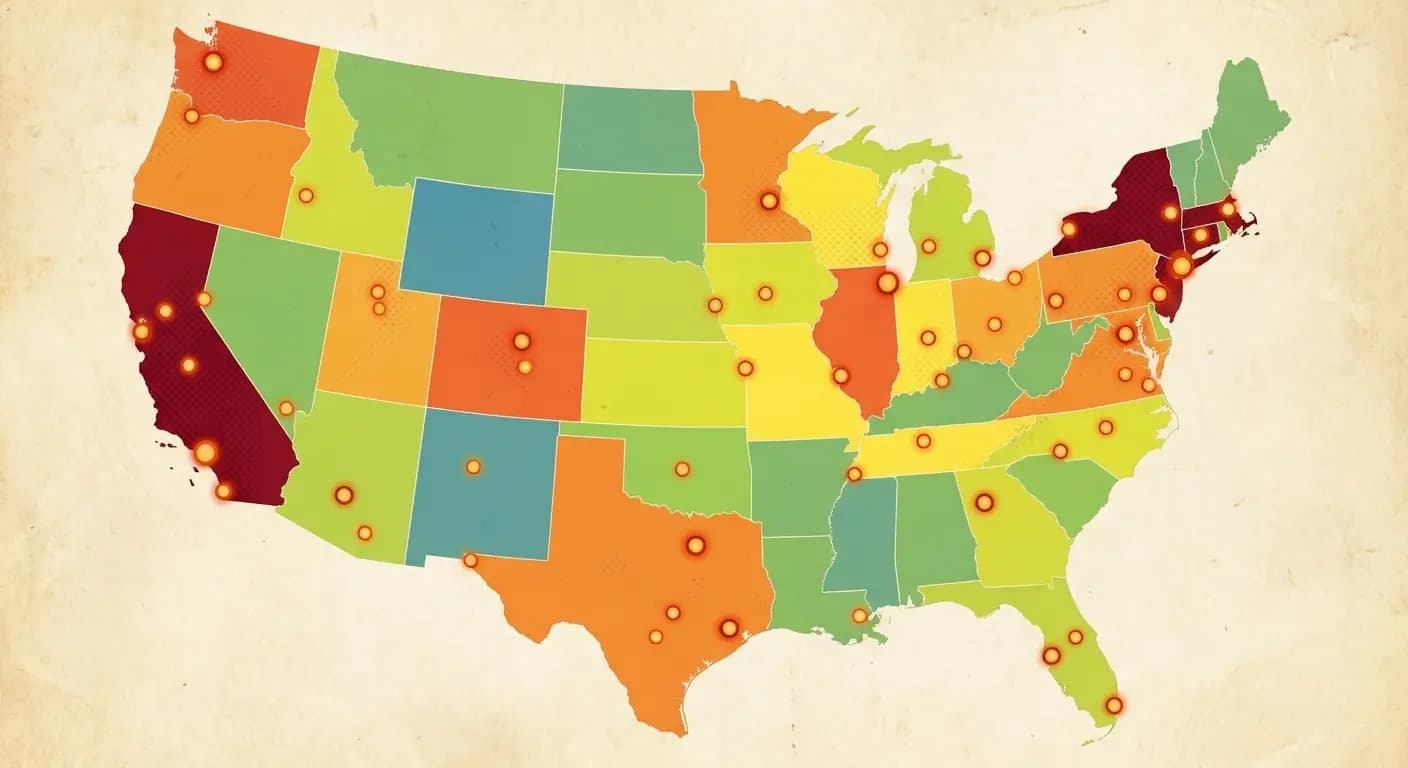
Top-Paying States for Arson Investigators (2026)
Lowest-Paying States
Mississippi ($44,000–$68,000), Arkansas ($46,000–$70,000), West Virginia ($47,000–$71,000), Montana ($48,000–$72,000), and South Dakota ($48,000–$73,000) represent the lower end of the national range.
Metropolitan Premium Positions
San Francisco Bay Area investigators earn $92,000–$128,000. New York City investigators earn $85,000–$115,000. Washington DC metro area roles pay $82,000–$112,000. Los Angeles investigators earn $79,000–$108,000.
Cost of living complicates direct salary comparisons. A $95,000 salary in San Francisco provides less purchasing power than $68,000 in Oklahoma City. States without income tax (Texas, Florida, Nevada) effectively increase take-home pay by 5–9% compared to high-tax states at equivalent salaries.
Certification is the highest-return investment available to arson investigators. IAAI-CFI adds $8,000–$12,000 to annual salary at all experience levels. That premium applies immediately and compounds over a 25–30 year career.
IAAI-CFI: The Standard Credential
The IAAI Certified Fire Investigator credential requires three years of full-time fire investigation experience, a minimum of 80 hours of approved training, and a comprehensive written examination. It is recognised by employers, prosecutors, and courts as the benchmark qualification in arson investigation.
The salary impact is direct. Entry-level investigators without certification earn $49,000–$56,000. Add IAAI-CFI and the range shifts to $57,000–$68,000 for the same experience level. Mid-career investigators see a similar premium: non-certified investigators with 7–10 years experience earn $65,000–$78,000, while certified investigators at the same tenure earn $73,000–$90,000.
Federal agencies strongly prefer or require IAAI-CFI for arson investigation roles. Many agencies set it as a hard requirement for promotion to senior investigator positions.
IAAI-CFI also opens consulting opportunities. Insurance companies and law firms seek certified investigators for expert witness work at $175–$300 per hour.
Certification Salary Premium Comparison
For a detailed comparison of IAAI and NAFI certification pathways, see the guide to understanding the difference between NAFI and IAAI certification programs.
Specialisation is the single most effective way to move from the middle of the arson investigator salary range to the upper tier. General arson investigators with 10 years experience earn $72,000–$88,000. Specialists at the same tenure earn $82,000–$105,000.
Wildfire Arson Investigation: $75,000–$115,000
Wildfire arson specialists earn $12,000–$22,000 more than general arson investigators in western states. California leads: CAL FIRE investigators with wildfire specialisation earn $88,000–$115,000.
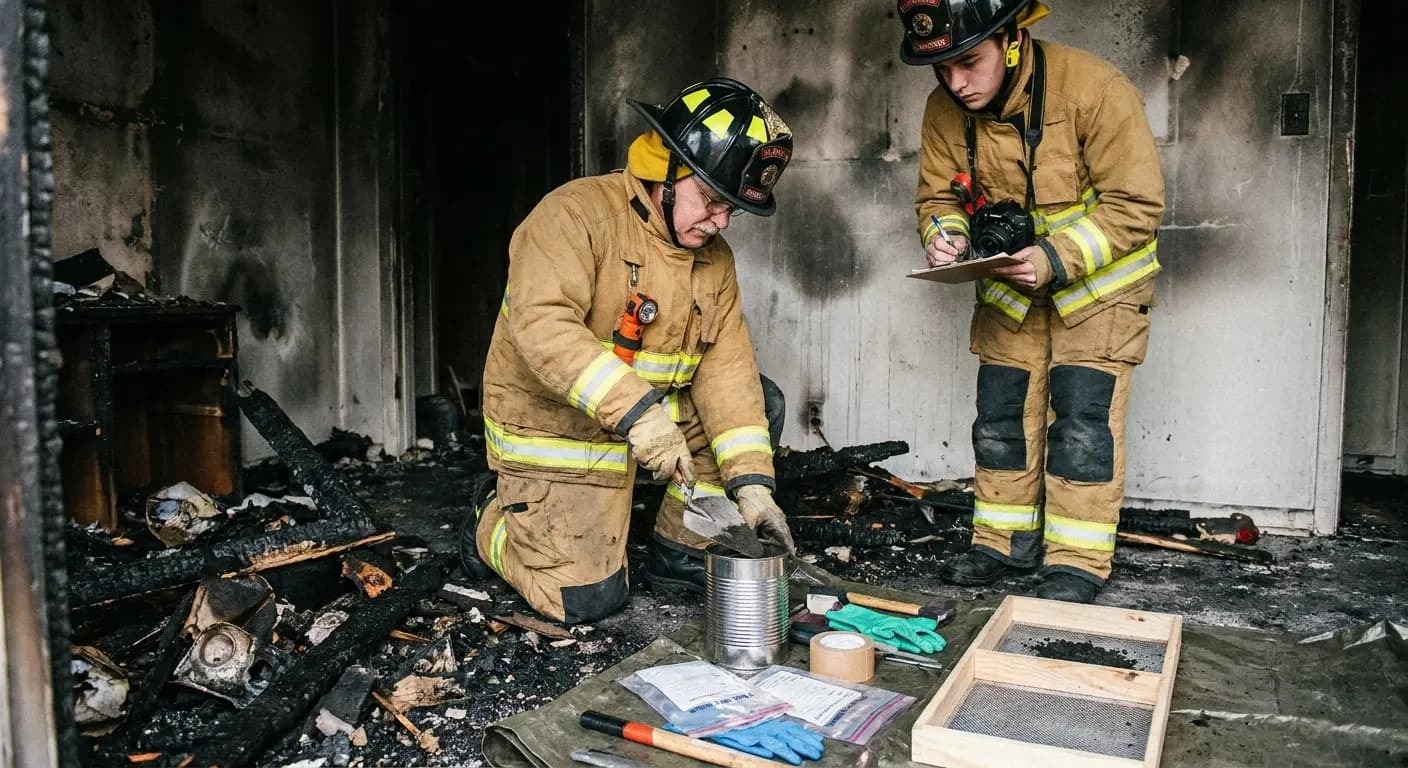
Federal land management agencies (USDA Forest Service, Bureau of Land Management, National Park Service) employ wildfire arson investigators at GS-11 through GS-13 levels: $80,000–$108,000. Oregon, Washington, Colorado, and Arizona pay premiums of $75,000–$98,000 for wildfire expertise.
The role requires specialised skills: understanding fire behaviour in wildland fuels, GIS mapping and aerial photography, tracking fire progression across large areas, and coordinating with multiple agencies across jurisdictions. Climate change is extending fire seasons and increasing wildfire frequency, which continues to drive demand for this specialisation.
For a detailed overview of the methodology involved, see the wildfire arson investigation guide.
Insurance Fraud Investigation: $70,000–$120,000
Insurance fraud specialists earn $70,000–$105,000 as full-time investigators and up to $120,000+ in private sector consulting. The role combines fire scene analysis with financial forensics: tracking financial distress, insurance coverage changes, and business performance alongside physical evidence.
Skills beyond standard arson investigation include financial document analysis, understanding insurance policies and claims processes, recognising fraud indicators such as over-insurance and suspicious timing, and testifying about financial evidence in civil and criminal proceedings.
State fire marshal offices employ fraud specialists at $68,000–$92,000. Insurance companies hire in-house investigators at $65,000–$88,000. Private investigation firms specialising in insurance fraud pay $75,000–$110,000 for experienced investigators.
Explosives Investigation: $85,000–$138,000
Explosives investigation is the highest-paid arson specialisation. ATF explosives enforcement officers and special agents earn $95,000–$138,000. FBI agents with explosives expertise earn comparable amounts.
Required training is extensive: hazardous devices certification through FBI or ATF schools, post-blast investigation courses, chemistry and explosives science training, and hazardous materials handling certification. Hazard pay adds $5,000–$15,000 annually in many jurisdictions.
Understanding the full range of arson investigation techniques helps investigators determine which specialisation best fits their existing skill set.
Career earnings in arson investigation are not simply a function of time served. Strategic decisions at key points determine the difference between a $70,000 plateau and a $130,000 ceiling.
Years 1–3: Entry Level ($49,000–$58,000)
The entry phase is foundational. Investigators are learning criminal procedure, building courtroom familiarity, and accumulating the case hours required for IAAI-CFI eligibility. Geographic flexibility and agency selection matter more than starting salary at this stage.
Most entry-level investigators come from one of three backgrounds: firefighters transitioning to investigation, law enforcement officers specialising in arson, or fire science graduates. Each path carries different strengths. Firefighters understand scene behaviour. Law enforcement officers understand criminal procedure. Graduates bring current academic knowledge but lack field experience.
Securing the first position is competitive. Applying to 15–20 agencies before hiring is common. Smaller agencies offer less competition, and the full case ownership that smaller jurisdictions provide accelerates learning.
Your fire investigator CV should emphasise both fire science knowledge and criminal investigation interest at this stage.
Years 4–12: Prime Growth Phase ($62,000–$94,000)
Mid-career is where compensation accelerates most. Primary certification completion, independent casework, and specialisation decisions compound into meaningful salary jumps.
Two career decisions define this phase financially. The first is certification: obtaining IAAI-CFI and CFEI during this window adds $15,000–$20,000 to earning potential immediately. The second is specialisation: choosing wildfire arson, insurance fraud, or explosives investigation before year ten positions investigators for the upper salary tier at senior level.
Strategic lateral moves also accelerate growth. Moving from a municipal department to a state fire marshal office adds $15,000–$25,000. Moving from state to federal adds another $20,000–$35,000. Investigators who make one strategic move during this phase typically earn $150,000–$200,000 more over the remainder of their career than those who remain static.
Years 15+: Senior and Consulting Phase ($95,000–$200,000+)
Senior investigators command $95,000–$138,000 in full-time positions. Federal GS-14 and GS-15 roles reach $130,000–$165,000 before locality pay.
Consulting becomes viable at this stage. An established investigator with IAAI-CFI, courtroom experience, and a specialisation can build a consulting practice generating $120,000–$200,000+ annually. Expert witness fees of $175–$350 per hour, supplemented by case review and training contracts, constitute the upper ceiling of arson investigation earnings.
Some senior investigators follow a hybrid model: collecting public sector pension income while maintaining an active consulting practice. Combined income at this stage can exceed peak full-time earnings.
For a full breakdown of the pathway to this career, see how to become a fire investigator.
Documentation consumes 30–40% of an arson investigator's working hours. Scene photography, evidence logging, chain of custody records, and NFPA 921-compliant report writing are not optional: they determine whether cases hold up in criminal proceedings.

The connection between documentation quality and career earnings is direct. Prosecutors seek investigators whose reports are thorough and compliant. Defence attorneys have fewer grounds to challenge well-documented findings. Supervisors and agencies promote investigators who handle complex caseloads without creating bottlenecks.
Paper-based systems and generic case management tools create inefficiencies that constrain capacity. Duplicate data entry, scattered evidence files, and manual report construction limit how many cases an investigator can manage. That ceiling limits advancement.
Blazestack's evidence and media management system automatically timestamps every custody action and stores all case media in a single secure location; the chain of custody documentation arson cases required is built into the workflow rather than added after the fact.
Investigators using Blazestack report 25–35% time savings on documentation. That recovered time supports certification pursuit, specialisation development, and the capacity to take on complex cases that build professional reputation. The tools investigators use directly affect the career trajectory their documentation enables.
How much do arson investigators make compared to fire investigators?
Arson investigators earn a median of $68,500 annually, compared to $61,200 for general fire investigators, a 12–18% premium. The gap is smallest at entry level and largest at senior level, where criminal investigation expertise and courtroom reputation command the most significant premiums.
Do arson investigators receive overtime pay?
Most public sector arson investigators receive overtime pay at time-and-a-half or double-time rates. Active investigations frequently generate 10–20 hours of additional weekly work, adding $15,000–$25,000 to annual compensation. Federal investigators receive Law Enforcement Availability Pay (LEAP), which adds 25% to base salary in lieu of traditional overtime.
What benefits do arson investigators typically receive?
Public sector benefits add 25–40% to total compensation value and include defined-benefit pensions, employer-subsidised health insurance (75–90% of premiums), 15–25 paid vacation days, education reimbursement of $3,000–$8,000 annually, and overtime provisions. Federal benefits additionally include FERS pension, Thrift Savings Plan with 5% matching, and law enforcement early retirement at age 50 with 20 years of service.
Can arson investigators work as consultants?
Experienced investigators with 15+ years of casework, strong credentials, and established courtroom reputations can build consulting practices generating $80,000–$200,000+ annually. Expert witness fees range from $175 to $350 per hour. Consulting requires professional liability insurance, business infrastructure, and a reputation built through decades of active investigation work.
Does geographic location significantly affect arson investigator salary?
Yes. Geographic location creates a 40–60% salary variation for equivalent positions. California pays $78,000–$118,000. Mississippi pays $44,000–$68,000. Metropolitan areas add 15–30% premiums over state averages. Cost of living and state income tax rates affect real purchasing power more than nominal salary differences.
Do arson investigators need college degrees?
Degree requirements vary by employer. Federal agencies (ATF, FBI) require bachelor's degrees, typically in fire science, criminal justice, chemistry, or engineering. State and local agencies vary. Investigators with bachelor's degrees earn 15–25% more than those with high school diplomas at comparable experience levels. Once an investigator accumulates 10+ years of experience and strong certifications, education becomes less significant than case record and professional reputation.
What is the job outlook for arson investigators through 2034?
Job growth for arson investigators is projected at 6–8% through 2034. Demand drivers include increasing wildfire frequency in western states, insurance fraud sophistication, retirement waves among investigators who entered the field in the 1990s and 2000s, and growing technology integration requirements. Total arson investigator positions nationally number approximately 8,000–10,000, with 400–600 annual openings. Specialisation and geographic flexibility improve hiring prospects significantly.


Trusted by Public and Private Investigator Teams Everywhere
Whether you're a big state agency, a small local fire department or somewhere in between, Blazestack software (NFPA 921® & CJIS compliant) collects fire scene data and generates standardized origin and cause reports in a fraction of the time of other methods.
To learn more about Blazestack, give us a call at (866) 303-4344 or email us at support@blazestack.com
Get Your Free 14-Day Trial and Custom Price Quote Now
We'll let Blazestack do the talking. Try it out right now for free.
A member of our staff will be in touch shortly.