How to Become a Wildland Firefighter in 2026
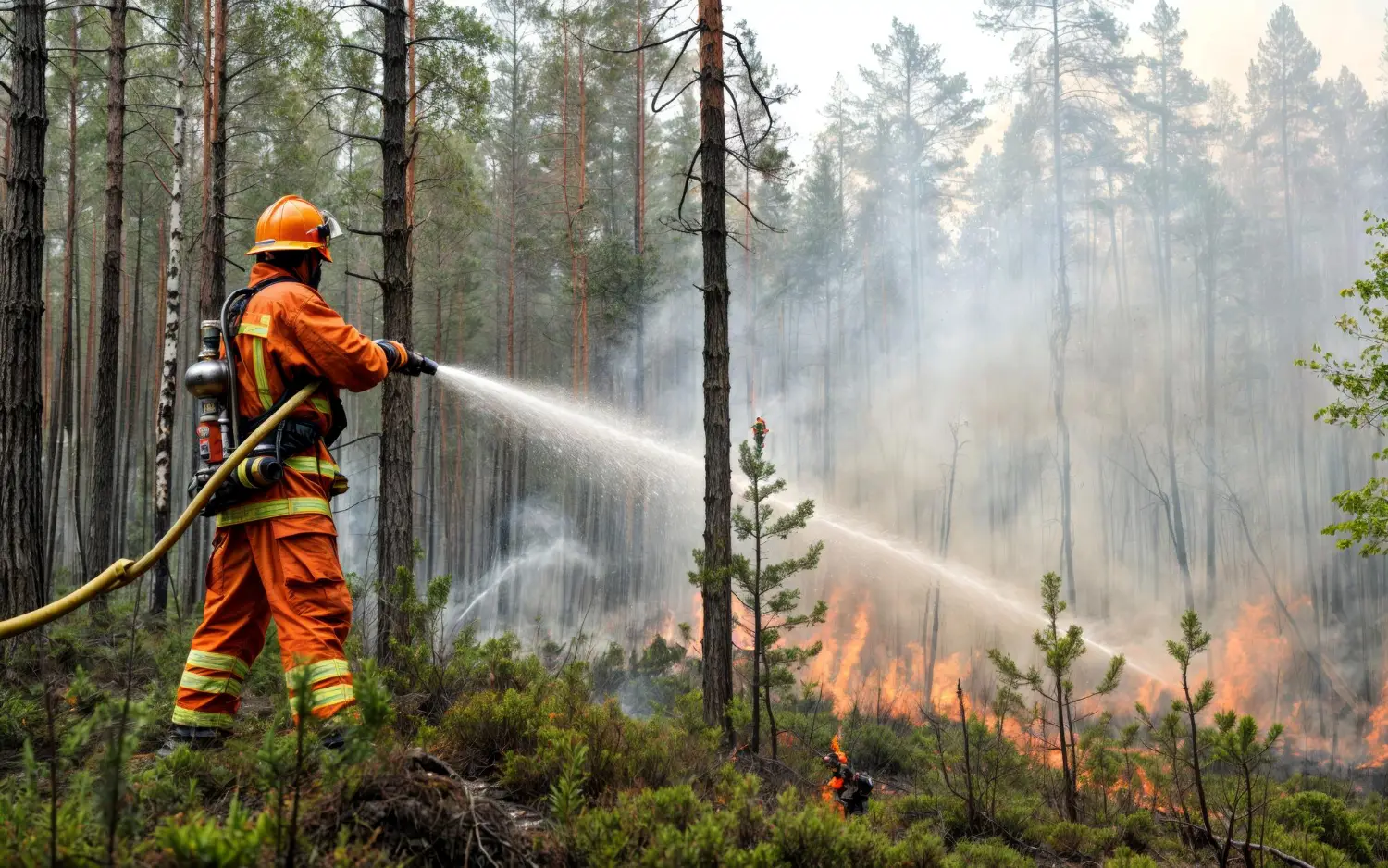
Wildland firefighters are responders, but they’re also strategists, sawyers, diggers, pilots, EMTs, and in the worst moments, survivalists. Whether you’re eyeing the job for the first time, transitioning from structural fire, or already working fire investigations and considering crossover work, this guide on how to become a wildland firefighter breaks down what it takes to become one today and what the job really demands.
We’ll cover the full picture with certifications, risks, pay, liability exposure, and even your potential role as expert witness later down the line.
Table of Contents
The Hollywood version of wildland firefighting isn’t always accurate. This is dirty, dangerous, technical work. You’re cutting line with a pulaski through 100°F heat. You’re climbing slopes with 50 lbs of gear on your back. You’re hiking into burns where air support can’t reach and building containment from the ground up.
Roles vary, but here’s what you can expect:
- Hand crew members dig, cut, and burn fuel breaks
- Engine crews handle mobile water delivery and mop-up
- Helitack drops in via chopper to attack early starts
- Hotshots hit the toughest terrain on the worst days
- Smokejumpers parachute into remote, inaccessible ignition points
Behind the frontlines are logistics, intel, safety officers, and air ops, which are all essential to managing wildfire chaos.
You need to meet the baseline standards to become a wildland firefighter. These are essential filters for one of the most physically and mentally demanding jobs in public safety. Entry-level wildland firefighter positions are accessible, but only if you can prove you're reliable, trainable, and ready to work in extreme conditions.
Here’s what you need to qualify:
- Age: You must be at least 18 years old by the first day of your assignment, no exceptions.
- Citizenship: U.S. citizens or permanent residents are eligible to apply for federal and most state positions.
- Education: A high school diploma or GED is typically the minimum. Higher education isn’t required, but it can help you advance.
- Driver’s License: A valid driver’s license is necessary, especially if you’re expected to operate fire apparatus or travel between assignments.
- Background Check: All federal and state crews require a clean criminal record check. Certain convictions may disqualify you, particularly for positions involving security clearance or vehicle operation.
- Drug Screening: Be prepared for pre-employment and random drug testing throughout the season. THC, even if legal in your state, may still disqualify you under federal employment.
- Fitness Standard: You must pass the Work Capacity Test (WCT), known as the Pack Test, to qualify for fireline duty.
Training, Certifications, and Red Carding
The gold standard for wildland fire qualifications is the Incident Qualification Card, known as the Red Card. To get it, you’ll need:
- S-130: Firefighter Training
- S-190: Introduction to Wildland Fire Behavior
- L-180: Human Factors in the Wildland Fire Service
- IS-100/700: FEMA’s ICS and NIMS courses (online)
Once you’ve passed these courses, completed your pack test, and been evaluated in the field (via Position Task Books), you’ll be red-carded to fight fire.
Federal wildland firefighter positions have transitioned to a new occupational series. All Forest Service positions now use the 0456 Wildland Fire Management series and are classified under the new GW (General Wildland Firefighter) pay scale, replacing the old GS-0462 Forestry Technician classification. If you're searching on USAJobs, use the GW series and the NIFC job portal to find current openings — the labeling on job postings has changed significantly for the 2026 season.
Agencies offering these trainings include:
- U.S. Forest Service (USFS)
- Bureau of Land Management (BLM)
- National Park Service (NPS)
- State agencies like Cal Fire and DNR
- Community colleges and fire academies
Not all wildland fire crews operate the same way, and choosing where to apply can dramatically shape your experience, exposure, pay, and even long-term career path. Your employer determines not just your paycheck but also your access to training, advancement, medical coverage, and incident types.
Let’s break down the major differences between federal, state, and private-sector fire crews:
2026 Pay Reform — Permanent Base Pay Increase
As of March 2025, the temporary $20,000/50% pay supplement that federal wildland firefighters had received since 2021 has been replaced by a permanent pay reform (P.L. 119-4). Key changes:
- New GW (General Wildland Firefighter) salary tables replace the old GS pay schedule, with grade-specific increases ranging from 42% for entry-level (GW-1) to 1.5% for senior grades
- New Incident Response Premium Pay (IRPP) allows all federal employees to earn extra pay for qualifying wildfire deployments exceeding 36 hours
- Unlike the old supplement, the new base pay counts toward retirement calculations — a significant long-term benefit
- Permanent and seasonal employees alike are covered, including tribal wildland firefighters through the Bureau of Indian Affairs
Federal wildland jobs, especially with hotshot or helitack crews, are highly competitive. Apply early from November to January through USAJobs.gov and cast a wide net with multiple duty locations. For state jobs, follow individual agency calendars; many accept applications as late as April but fill fast.
If you’re considering transitioning from investigation to suppression for field immersion, some state crews or private engines offer shorter-term deployments ideal for cross-training without a full-season commitment.
Seasonal Hiring Timeline and Application Tips
Wildland fire hiring is seasonal and competitive. Most federal applications open between November and January for jobs that start in spring.
For the 2026 season, the primary federal hiring windows ran from August through November 2025. BLM and NPS positions were posted October 1–21, and most USFS positions were open October 15 through November 11, 2025. Additional rounds of last-minute permanent hiring are expected in spring 2026.
2026 Hiring Tip: Set up saved searches on USAJobs.gov filtered by state and fire-specific series (GW-03, GW-04, or 0456) to receive email alerts when new rounds open. DOI positions can also be tracked directly at doifirescareers.usajobs.gov. The USFS posts openings on fs.usda.gov.
If you want to stand out from other applicants, here are a few tips to follow:
- Create a USAJobs profile and resume tailored to wildland roles
- Apply to multiple duty locations
- Get your basic certs ahead of time
- Network with fire personnel at training events and job fairs
- Follow up with hiring contacts directly
This isn’t a job you coast through. Wildland firefighting pushes your body to its limits and then demands more. Expect 12- to 16-hour shifts for 14 to 21 days straight, with little downtime, no showers, and sleep that comes on the ground, often under a sky that’s still glowing with embers. You’ll carry 45+ pounds of gear, hike thousands of vertical feet in rugged terrain, and cut line for hours.
The mental toll is also real and lasting. You’ll face close calls, see teammates injured, and walk into neighborhoods still smoldering from a fire you couldn’t stop in time. The psychological load builds over time with fatigue, moral injury, survivor’s guilt, and burnout. Many wildland firefighters report long-term symptoms of anxiety, depression, or PTSD.
Start training at least 2–3 months ahead of the season. Prioritize rucking, interval running, leg endurance, and full-body strength. Simulate heat stress by training during peak hours or using elevation gain to mimic real terrain. Add recovery days to prevent injury before you're even on the line.
Health Risks to Consider
Smoke inhalation, burns, heat stroke, rhabdomyolysis, and cardiac arrest are all occupational risks. Long-term exposure to particulate matter and benzene raises cancer risk. The IAFF and federal studies now recognize wildland firefighting as a high-risk occupation for lung, bladder, and kidney cancers.
Other risks include:
- Lyme disease and tick-borne illness
- Respiratory infections
- Chronic dehydration and electrolyte loss
- Sleep deprivation and decision fatigue
New Federal Mental Health Support Program
The U.S. Forest Service and Department of the Interior have launched a new Joint Federal Wildland Firefighter Health and Wellbeing Program, in partnership with Magellan Federal. Free, confidential therapy services are now available in every state, tailored specifically to wildland firefighters and dispatchers.
Research cited by the Forest Service found wildland firefighters experience depression and anxiety at 2–3× the rate of the general population, and PTSD symptoms at 4× the rate. If you're on an active crew or considering the career, you can access services directly through Magellan Federal at 1-800-424-4051.
Liability and Injury Claims
If you’re injured on the line, your protection depends on who you work for. Federal firefighters fall under the Federal Employees' Compensation Act (FECA), while state and private crew members rely on workers’ comp systems.
But here’s the catch:
- Claims are often delayed or denied
- Medical coverage can be limited for long-term issues
- Private contractors may not offer full liability protection
If you're injured during off-shift hours or in camp? That’s a gray zone. Know your coverage and advocate early. Document everything, including injury reports, witness names, symptoms, and treatment delays.
Wildland firefighters are increasingly called upon post-incident, not just as responders, but as expert witnesses. You may be asked to testify in civil lawsuits, insurance disputes, or criminal arson trials about:
- Fire behavior and spread patterns
- Suppression timelines and response adequacy
- Fuel conditions and weather effects
- Origin location and possible ignition sources
If you’re called to testify, be clear about your scope of expertise. Stick to facts, avoid speculation, and back up your statements with your documentation, fireline notes, and accepted fire science. Testifying doesn’t require an advanced degree, but it does require defensible observation. Your credibility depends on how well you documented decisions during the fire.
Wildland firefighting is a launchpad. Many move on to become prevention officers, burn bosses, dispatchers, fire investigators, or even fire behavior analysts (FBANs). If you already work investigations, field deployment can sharpen your instincts on ignition, spread dynamics, and scene documentation.
Career crossover roles include:
- Fire prevention specialist
- Wildland arson investigator
- Structure–wildland liaison
- Fire modeling tech
The creation of the USWFS is opening up new career ladders for DOI-employed wildland firefighters. For the first time in 50 years, the Interior Department has released standardized position descriptions for the new 0456 Wildland Fire Management series, clarifying how firefighters can advance through GW grades.
The shift toward a more permanent federal workforce continues — as of 2024, 75% of DOI wildland fire personnel hold permanent positions, up 22% from five years prior. For those seeking long-term federal careers, this is a meaningful shift away from the seasonal-only model that has frustrated workforce retention for decades.
Whether you stay on the line or move to a role behind the scenes, your time as a firefighter rewires how you see every fire. Review the qualification requirements and make sure you’re mentally and physically ready to take on the responsibilities that come with this job. While it’s challenging, it is also a very rewarding career.
Related Blogs


Trusted by Public and Private Investigator Teams Everywhere
Whether you're a big state agency, a small local fire department or somewhere in between, Blazestack software (NFPA 921® & CJIS compliant) collects fire scene data and generates standardized origin and cause reports in a fraction of the time of other methods.
To learn more about Blazestack, give us a call at (866) 303-4344 or email us at support@blazestack.com
Get Your Free 14-Day Trial and Custom Price Quote Now
We'll let Blazestack do the talking. Try it out right now for free.
A member of our staff will be in touch shortly.